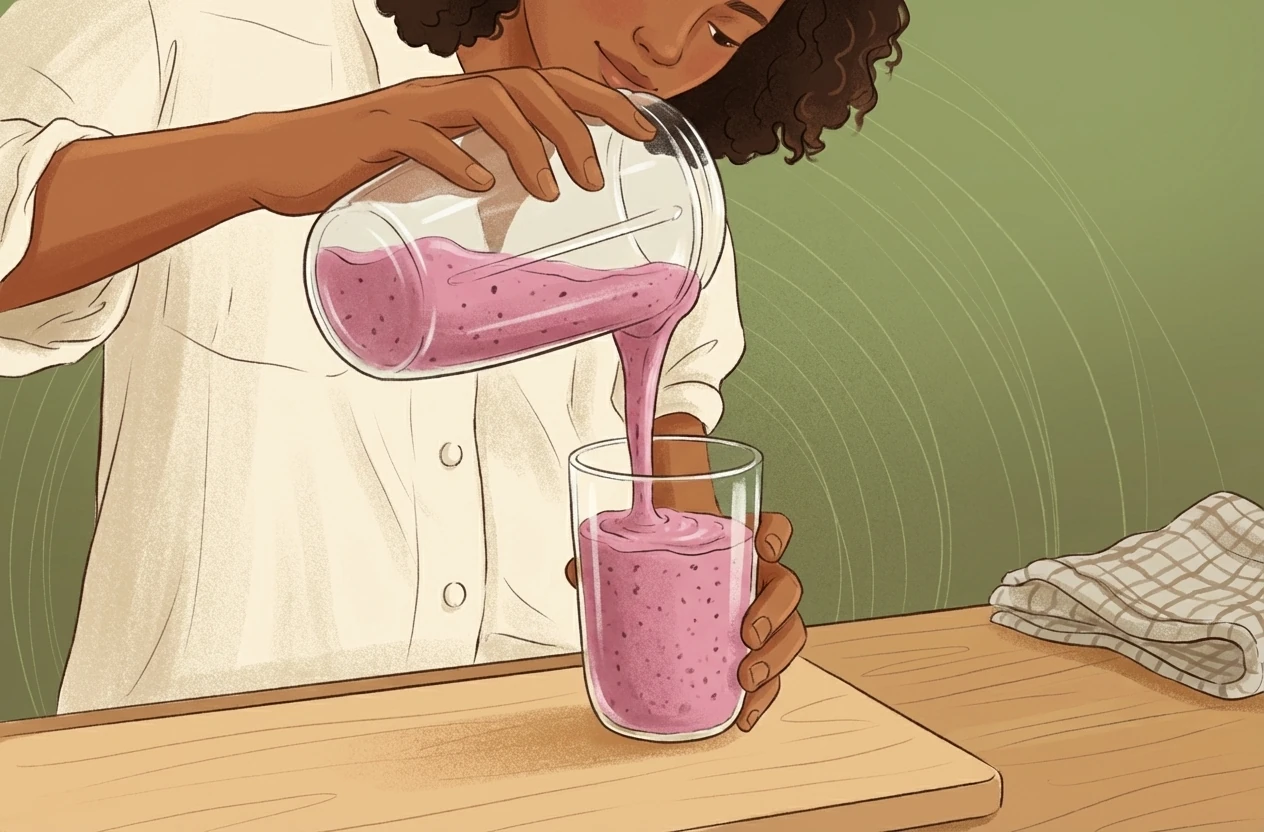
Smoothies are a convenient and delicious way to boost your nutrient intake, especially protein, which supports muscle health and helps you feel full longer1 . Adding protein-rich ingredients to smoothies can prevent blood sugar spikes and sustain energy throughout the day1 . Whether you prefer dairy, plant-based, or powdered proteins, there are many tasty options to enhance your smoothie’s nutrition and flavor2 .
Adding high-protein foods to smoothies can boost their nutritional value and make them more filling. Greek yogurt contains more than twice the amount of protein in regular yogurt. Protein helps slow digestion and absorption of carbohydrates, preventing blood sugar spikes and supporting healthy weight management. 127
Greek Yogurt for Smoothies
Greek yogurt is a standout protein source for smoothies because it contains nearly double the protein of regular yogurt per serving3 . This concentrated dairy product is made by straining out the liquid whey, resulting in a thick texture and rich protein content4 . Greek yogurt provides all nine essential amino acids, making it a complete protein that supports muscle repair and overall health5 . It also contains probiotics, beneficial bacteria that promote gut health and may reduce the risk of certain cancers4 . Adding Greek yogurt to fruit smoothies, such as those with berries or peaches, not only boosts protein but also creates a creamy texture6 .
- Greek yogurt contains more than twice the protein of regular yogurt7 .
- It supplies vitamin B12, important for red blood cell formation and nervous system function4 .
- Probiotics in Greek yogurt support digestive and immune health4 .
- Pairing Greek yogurt with fiber-rich fruits helps probiotics thrive4 .
“Most yogurt, including Greek, contains probiotics, 'good bacteria' that help keep your gut microbiome healthy.”
— Elaine Siu, City of Hope Cancer Center4
Chia Seeds Protein Boost
Chia seeds are a versatile plant-based protein source that also provide omega-3 fatty acids, dietary fiber, and essential minerals like calcium and magnesium8 . Each ounce contains about 4.7 grams of protein, contributing to daily protein needs especially in vegetarian or vegan diets9 . Chia seeds can be added to both fruit and vegetable smoothies, enhancing nutrition without overpowering flavor10 . Their gel-forming property when hydrated thickens smoothies, so it’s best to consume chia seed smoothies soon after blending for optimal texture11 .
- Chia seeds offer a complete plant protein with all nine essential amino acids12 .
- They provide gut-friendly prebiotic fiber that supports digestion12 .
- Rich in calcium, magnesium, phosphorus, and manganese8 .
- Ideal for adding plant protein and fiber to smoothies7 .
Peanut Butter in Smoothies
Peanut butter is a popular smoothie add-in due to its creamy texture, rich flavor, and protein content13 . Two tablespoons provide about 7 grams of protein, making it an effective way to increase protein intake14 . Peanut butter pairs well with ingredients like cacao, blueberries, and cinnamon, enhancing both taste and nutrition15 . It also supplies B vitamins, magnesium, vitamin E, and potassium, contributing to overall health12 .
- Provides approximately 7 grams of protein per two tablespoons14 .
- Contains healthy fats and micronutrients supporting heart and muscle health12 .
- Complements flavors such as chocolate and berries in smoothies15 .
Hemp Seeds Nutrition
Hemp seeds are a nutrient-dense addition to smoothies, offering nearly 9.5 grams of protein per three tablespoons16 . They also provide essential minerals like magnesium and zinc, along with heart-healthy fats17 . The nutty flavor and creamy consistency of hemp seeds improve smoothie texture and taste18 . Hemp seeds contribute antioxidants and anti-inflammatory compounds, supporting overall wellness12 .
- High protein content with 9.5 grams per three tablespoons16 .
- Rich in magnesium, zinc, and healthy fats17 .
- Enhances flavor and creaminess in smoothies18 .
Almond Butter Benefits
Almond butter is a tasty alternative to peanut butter, especially for those with peanut allergies when produced in peanut-free facilities19 . Two tablespoons of almond butter provide about 6.7 grams of protein, supporting muscle maintenance and satiety20 . Smoothies combining almond butter, frozen cherries, and Greek yogurt create a creamy, sweet flavor profile21 . Almond butter also supplies heart-healthy fats, fiber, antioxidants, and important minerals like calcium and magnesium12 .
- Offers approximately 6.7 grams of protein per two tablespoons20 .
- Safe for peanut-allergic individuals if processed in peanut-free environments19 .
- Contains antioxidants, fiber, and minerals beneficial for health12 .
Cottage Cheese Protein
Cottage cheese is a high-protein dairy product that can significantly boost the protein content of smoothies22 . One cup contains about 24 grams of protein, making it one of the richest dairy protein sources23 . It also provides roughly 17% of daily calcium needs, supporting bone health, muscle function, and hormone production24 . Adding cottage cheese to smoothies increases creaminess and nutritional value.
- Contains approximately 24 grams of protein per cup23 .
- Supplies 17% of daily calcium requirements per cup24 .
- Enhances smoothie texture and protein density22 .
Kefir for Smoothies
Kefir is a fermented dairy beverage rich in protein and probiotics25 . One cup provides over 9 grams of protein, helping increase fullness and support muscle health26 . The diverse probiotic strains in kefir promote gut health and improve digestion27 . Kefir’s fermentation process reduces lactose content, making it suitable for many lactose-intolerant individuals12 .
- Provides more than 9 grams of protein per cup26 .
- Contains probiotics that support digestive and immune health27 .
- Fermentation lowers lactose, improving tolerance12 .
Milk as Protein Source
Milk is a convenient and nutrient-rich liquid base for smoothies28 . Two percent milk contains over 8 grams of protein per cup, along with essential micronutrients like calcium, zinc, and vitamin B1229 . Its neutral flavor complements a wide variety of smoothie ingredients, making it a versatile choice30 .
- Supplies over 8 grams of protein per cup (2% milk) 29.
- Provides calcium, zinc, and vitamin B1229 .
- Neutral taste pairs well with fruit and vegetable smoothies30 .
Tofu in Smoothies
Tofu is a plant-based protein source commonly used in smoothies to increase protein intake31 . A 3-ounce serving contains about 8.7 grams of protein and is low in carbohydrates31 . Tofu also provides essential minerals such as calcium, zinc, selenium, and iron, supporting overall nutrition32 . Its mild flavor blends well with various smoothie ingredients.
- Contains approximately 8.7 grams of protein per 3-ounce serving31 .
- Supplies important minerals including calcium and iron32 .
- Suitable for plant-based diets and adds creaminess to smoothies33 .
Cashew Butter Uses
Cashew butter is a creamy nut butter that adds protein and minerals like zinc and magnesium to smoothies34 . Two tablespoons provide nearly 6 grams of protein, making it a good alternative to other nut butters35 . Its sweet, creamy flavor pairs especially well with chocolate-flavored smoothies36 .
- Provides about 6 grams of protein per two tablespoons35 .
- Contains zinc and magnesium, supporting immune and muscle function34 .
- Enhances chocolate smoothie flavors with creamy sweetness36 .
Collagen Powder Benefits
Collagen peptides are a concentrated protein source that can be easily added to smoothies37 . Typical servings provide around 10 grams of protein, depending on the brand38 . Unflavored collagen powder is neutral in taste, making it suitable for any smoothie recipe39 . Collagen supplementation supports musculoskeletal health and skin elasticity40 .
- Supplies approximately 10 grams of protein per serving38 .
- Supports bone, joint, and skin health40 .
- Neutral flavor blends well in all smoothie types39 .
Pumpkin Seeds Protein
Pumpkin seeds are a rich plant-based protein source, offering over 8 grams of protein per ounce41 . They are also high in magnesium, covering about 37% of daily needs per ounce, which helps regulate blood sugar and blood pressure42 43. Adding pumpkin seeds to smoothies boosts protein and mineral content while enhancing texture.
- Contains more than 8 grams of protein per ounce41 .
- Provides significant magnesium, aiding blood sugar and blood pressure control42 43.
- Adds crunch and nutrition to smoothies7 .
Chickpeas for Smoothies
Chickpeas add both protein and fiber to smoothies, improving texture and satiety44 . One cup of cooked chickpeas delivers substantial protein and fiber, which help promote fullness and support weight management45 46. Chickpeas work well in sweet smoothie recipes, enhancing flavor and nutrition47 .
- High in protein and fiber, supporting fullness and weight control45 46.
- Improves smoothie texture and nutritional profile44 .
- Ideal for sweet smoothie blends47 .
High-Protein Oats
High-protein oats provide more protein than regular oats, with some varieties containing nearly 30 grams per cup—about 50% more than standard oats2 . Standard oats contain roughly 10.7 grams of protein per cup48 . Oats can be added directly to smoothies or soaked beforehand to soften for a smoother texture2 .
| Oat Type | Protein per Cup (grams) | Notes |
|---|---|---|
| Regular Oats | ~10.7 | Commonly used in smoothies48 |
| High-Protein Oats | ~30 | About 50% more protein2 |
- Oats add protein, fiber, and complex carbohydrates2 .
- Soaking oats before blending improves smoothie texture2 .
Ricotta Cheese Protein
Ricotta cheese is a creamy dairy product that provides about 18.5 grams of protein per cup1 . It is also a good source of calcium, selenium, and several B vitamins, which enhance the nutritional value of smoothies1 . Adding ricotta cheese creates a rich, smooth texture while boosting protein content.
- Contains approximately 18.5 grams of protein per cup1 .
- Supplies calcium, selenium, and B vitamins1 .
- Adds creaminess and nutrition to smoothies1 .
Sunflower Seeds Nutrition
Sunflower seeds are rich in vitamin E, a powerful antioxidant that protects cells from damage2 . One ounce provides about 49% of daily vitamin E needs and approximately 5.47 grams of protein2 . They add a creamy texture and nutritional boost to smoothies.
- Provides nearly half of daily vitamin E per ounce2 .
- Contains about 5.47 grams of protein per ounce2 .
- Adds antioxidants and creaminess to smoothies2 .
High-Protein Plant Milks
Plant-based milks vary in protein content, so it is important to check nutrition labels when choosing one for smoothies2 . Soy milk contains about 8.32 grams of protein per cup, making it one of the highest protein plant milks2 . Oat milk provides about 4 grams of protein per cup2 . Both soy and oat milk are good dairy alternatives for fruit- and vegetable-based smoothies2 .
- Soy milk: ~8.32 grams protein per cup2 .
- Oat milk: ~4 grams protein per cup2 .
- Suitable for dairy-free and vegan diets2 .
Egg Whites and Powder
Egg whites are an excellent source of high-quality protein1 . Pasteurized egg whites and egg white powder can be safely added to smoothies to increase protein content1 . Egg white powder contains about 21.3 grams of protein per one-quarter-cup serving, while liquid egg whites provide about 6.63 grams per the same serving size1 .
- Egg white powder: ~21.3 grams protein per 1/4 cup1 .
- Liquid egg whites: ~6.63 grams protein per 1/4 cup1 .
- Safe and effective protein boosters for smoothies1 .
Sesame Seed Butter
Sesame seeds are rich in minerals such as calcium, copper, iron, and zinc2 . Although their protein content is lower than sunflower and pumpkin seeds, sesame seeds still provide about 3.18 grams of protein per ounce2 . Combining sesame seeds with other high-protein ingredients like Greek yogurt or collagen peptides can further enhance smoothie protein content2 .
- Contains approximately 3.18 grams of protein per ounce2 .
- Rich in calcium, copper, iron, and zinc2 .
- Complements other protein sources in smoothies2 .
Protein Powders Guide
Protein powders, including whey and pea protein, are concentrated protein sources commonly used in smoothies1 . They are shelf-stable and typically provide much higher protein concentrations than whole foods1 . For example, 30 grams of whey protein isolate adds about 25 grams of protein to a smoothie1 . Choosing unsweetened protein powders helps avoid excess sugar intake, which can negatively impact health1 .
- Whey protein isolate: ~25 grams protein per 30 grams serving1 .
- Pea protein is a recommended plant-based alternative12 .
- Prefer unsweetened powders to reduce added sugar1 .
Tips for Protein-Rich Smoothies
Adding at least one protein-packed ingredient to your smoothie enhances its nutritional value and helps you feel satisfied after drinking it1 . Start with 1.5 cups of frozen or fresh fruit such as berries, banana, or frozen peaches1 . Choose a protein source like a cup of Greek yogurt, 2 tablespoons of peanut butter, or a scoop of collagen peptides1 . Add about one cup of liquid per 1.5–2 cups of frozen fruit, such as protein-rich soy milk or hydrating coconut water1 . Include add-ins like pumpkin or chia seeds for extra protein, or cacao powder, kale, or cinnamon for flavor and nutrition1 . Blend all ingredients in a high-speed blender until smooth1 .
- Use a variety of protein sources to suit dietary preferences1 .
- Combine protein with fiber-rich ingredients to promote fullness1 .
- Balance flavors and textures for enjoyable smoothies1 .
“Whole foods generally include an array of nutrients that powders alone don't, like micronutrients (i.e., vitamins and minerals) and, depending on the food, phytochemicals, fiber, probiotics, and good fats.”
— Kristy Del Coro, culinary nutritionist and registered dietitian12
Quick Review
Smoothies are an easy and effective way to increase protein and nutrient intake1 . Protein helps slow carbohydrate digestion, preventing blood sugar spikes and keeping energy steady12 . Whole-food protein sources like Greek yogurt, peanut butter, pumpkin seeds, chickpeas, and kefir provide additional benefits such as fiber, probiotics, and essential minerals1 2. For muscle growth and repair, active adults should aim for 1.2–1.6 grams of protein per kilogram of body weight daily, which can be met with whole foods alone49 . Including protein-rich ingredients in smoothies supports satiety, muscle health, and overall nutrition50 .
- Protein-rich smoothies support muscle repair and weight management1 .
- Whole foods offer micronutrients and fiber beyond protein powders12 .
- Protein intake should be spread throughout the day for optimal benefits49 .