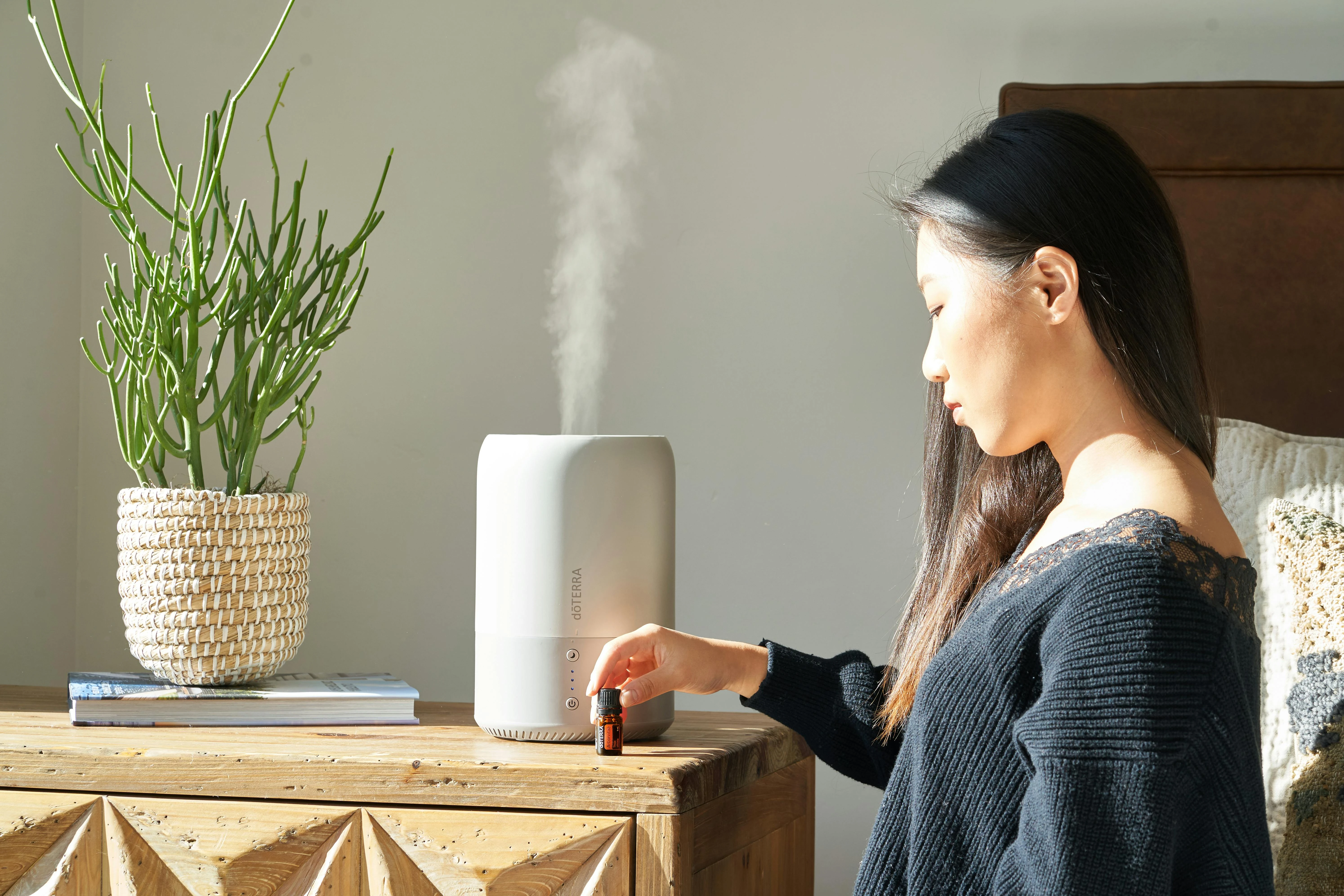
Dry indoor air is a common problem, especially during winter months when heating systems reduce moisture levels. This dryness can irritate the respiratory system and skin, leading to discomfort and increased risk of infections1 . Using a humidifier to add moisture to indoor air can help relieve these symptoms, improve breathing, and support skin hydration2 . Maintaining optimal humidity levels also plays a role in reducing the spread of respiratory viruses3 .
Relief for Nasal Congestion
Humidifiers increase moisture in the air, which helps reduce irritation in the nasal passages and airways caused by dry indoor air4 . When the air is dry, mucus can become thick and sticky, making it harder to clear from the respiratory tract. Adding humidity helps loosen mucus, making coughing or blowing the nose more effective5 . This can ease symptoms of congestion and promote better breathing.
Humidified air also soothes inflammation in the airways, reducing irritation and helping them become less reactive1 . This is particularly beneficial during colds or flu when nasal congestion is common. Using a humidifier can help relieve a stuffy nose and reduce throat discomfort caused by dryness6 . Running a humidifier at night may also promote more restful sleep by preventing dry airways that can cause coughing or snoring1 .
Humidifiers are often recommended for individuals at higher risk of respiratory issues, especially during winter when indoor air tends to be drier4 . However, people with allergies or asthma should consult a healthcare provider before use, as humidifiers can sometimes exacerbate symptoms if not used properly5 .
- Humidifiers add moisture to the air, reducing nasal and airway irritation4
- Moist air helps loosen mucus, making it easier to clear5
- Using a humidifier can relieve stuffy nose and throat dryness6
- Humidifiers may improve sleep by reducing coughing and snoring1
- Medical advice is recommended for asthma or allergy sufferers before use5
“When the air is dry, your respiratory system just isn’t happy. Even if you have no medical problems at all, you can feel the effects. Your skin and nasal passages get dry—all the way down to your lungs.”
— Sobia Farooq, MD, Cleveland Clinic1
Reducing Viral Infection Risks
Maintaining indoor humidity above 40% can help reduce the survival and transmission of influenza and other respiratory viruses3 . Viruses tend to be less stable in more humid environments, which may decrease their ability to spread through the air3 . Studies have shown that keeping humidity levels between 40% and 60% is associated with lower transmission rates of respiratory viruses, including SARS-CoV-27 .
However, excessive humidity above 50% can encourage the growth of mold, dust mites, and bacteria, which may worsen allergies and respiratory conditions5 . Proper use and maintenance of humidifiers are essential to prevent these risks. Regular cleaning prevents the growth of bacteria and mold in the humidifier, which could otherwise be released into the air and cause health problems5 .
- Optimal indoor humidity (40–60%) reduces virus survival and transmission3
- Humid air produces antiviral compounds like hydrogen peroxide8
- Excess humidity (>50%) can promote mold and dust mite growth5
- Regular humidifier cleaning prevents bacterial and mold contamination5
- Proper humidity control supports respiratory health and reduces infection risks7
Moisturizing Dry Skin
Dry indoor air causes moisture to evaporate from the skin, leading to dryness, cracking, and irritation9 . This is especially common during winter when heating systems lower indoor humidity9 . Using a humidifier helps maintain skin hydration by adding moisture to the air, which can reduce symptoms of dry skin9 .
Increased humidity supports the skin’s natural barrier function, making it less susceptible to irritation and conditions like atopic dermatitis8 . Humidifiers can also improve the condition of hair and nails by preventing dryness and brittleness1 . Maintaining indoor humidity between 30% and 50% is recommended to support skin health without encouraging mold growth5 .
- Dry air causes skin moisture loss and irritation9
- Humidifiers add moisture to help maintain skin hydration9
- Proper humidity supports skin barrier and reduces flare-ups8
- Humidifiers can improve hair texture and nail strength1
- Recommended indoor humidity for skin health is 30–50% 5
“Humidifiers help when the air is too dry. Your skin, mouth and nose will feel dry, and you may begin to sneeze.”
— Killol Patel, M.D., JFK University Medical Center10
Humidifier Basics and Functions
A humidifier is a device designed to increase the humidity (water vapor concentration) in indoor air5 . By releasing water vapor or steam, humidifiers help maintain comfortable moisture levels, typically recommended between 30% and 50% 5. This range prevents dryness while avoiding excessive moisture that can promote mold and dust mites5 .
Humidifiers come in various sizes and designs to suit different needs. Portable units are convenient for individual rooms, while central humidifiers can add moisture to entire homes5 . Maintaining optimal humidity improves comfort and can prevent the growth of allergens like mold and dust mites5 .
- Humidifiers increase indoor humidity by releasing water vapor or steam5
- Recommended indoor humidity is 30–50% for comfort and health5
- Proper humidity prevents mold, mildew, and dust mite growth5
- Portable humidifiers suit single rooms; central units humidify whole homes5
- Humidifiers support comfort and reduce dryness-related symptoms5
💡 Did You Know?
Humidifiers add moisture to the air. They can help people with dry skin, allergies, and respiratory problems2 .
Common Humidifier Types
Humidifiers are generally categorized into cool-mist and warm-mist types, each with distinct features and considerations5 .
Cool-Mist Humidifiers
Cool-mist humidifiers release a cool or room-temperature mist into the air5 . Common types include ultrasonic and evaporative humidifiers5 . These units are effective for reducing cold- or virus-related inflammation5 . However, they require regular cleaning to prevent contamination by bacteria, mold, or allergens that can be dispersed into the air5 .
Warm-Mist Humidifiers
Warm-mist humidifiers, also known as steam vaporizers, use heat to create a warm mist5 . They are generally easier to clean and less likely to spread organisms compared to cool-mist types5 . However, the heat involved can pose a burn risk, especially for children and pets, requiring careful handling5 .
| Humidifier Type | Features | Benefits | Risks |
|---|---|---|---|
| Cool-Mist | Releases cool mist; ultrasonic or evaporative | Effective for inflammation relief; safer around children | Requires frequent cleaning; risk of spreading contaminants if dirty5 |
| Warm-Mist (Steam) | Uses heat to produce warm mist | Easier to clean; less microbial spread | Burn risk; not ideal for children or pets5 |
| Sources: 5 | |||
- Cool-mist humidifiers release room-temperature mist and need regular cleaning5
- Ultrasonic and evaporative are common cool-mist types5
- Warm-mist humidifiers produce steam and are easier to clean5
- Warm-mist units carry burn risks, especially for children and pets5
- Choice depends on household needs and safety considerations5
Proper Humidifier Usage Guidelines
To maximize benefits and minimize risks, proper humidifier use and maintenance are essential5 . Following manufacturer instructions ensures safe operation and effectiveness. Using distilled or bottled water helps prevent mineral buildup and reduces the release of impurities into the air5 .
Maintaining indoor humidity between 30% and 50% prevents mold growth and respiratory irritation5 . Daily cleaning and refilling with clean water reduce the risk of bacterial or mold contamination5 . Regular filter changes, as recommended by the manufacturer, maintain performance and safety5 . Using a hygrometer or humidifier with an internal gauge can help monitor and maintain optimal humidity levels5 .
- Follow manufacturer instructions for safe use5
- Use distilled or bottled water to prevent mineral buildup5
- Clean humidifier daily and change water regularly5
- Maintain humidity between 30% and 50% to avoid mold5
- Replace filters as recommended and monitor humidity with a hygrometer5
Potential Humidifier Health Risks
While humidifiers offer many benefits, improper use can lead to health risks. These include the growth and spread of germs and the potential for burns or spills.
Cultivating Germs and Other Irritants
Humidifiers create moist environments that can foster bacteria, mold, and other pathogens if not cleaned regularly5 . Standing water in tanks can harbor germs, which may be released into the air when the humidifier operates5 . This can trigger allergy symptoms, asthma flare-ups, or flu-like illnesses, especially in young children, older adults, and those with respiratory conditions5 .
Excessive humidity above 50% encourages dust mites, mold, and mildew growth, worsening allergies and respiratory problems5 . Condensation on windows or walls may indicate too much humidity5 . Using contaminated water or failing to clean the unit can increase health risks5 .
Causing Burns or Spills
Warm-mist humidifiers use heat to produce steam, which can cause burns if spilled or handled improperly5 . This risk is particularly significant in homes with children or pets5 . Careful placement and supervision are necessary to prevent accidents.
- Dirty humidifiers can spread bacteria and mold into the air5
- Standing water in tanks fosters germ growth5
- Excess humidity promotes allergens like dust mites and mold5
- Warm-mist humidifiers pose burn risks if spilled or touched5
- Regular cleaning and safe placement reduce these risks5
Key Benefits Summary
Humidifiers effectively increase indoor humidity, providing multiple health benefits when used properly5 . They help relieve nasal congestion by moisturizing airways and loosening mucus4 . Maintaining humidity above 40% can reduce the survival and transmission of respiratory viruses3 . Humidifiers also improve skin hydration, reducing dryness and irritation9 .
Proper maintenance and usage are crucial to avoid health risks such as mold growth, bacterial contamination, and burns5 . Individuals with asthma or allergies should consult healthcare providers before use to ensure safety5 .
- Humidifiers relieve congestion by adding moisture and thinning mucus4
- Optimal humidity reduces virus transmission and supports respiratory health3
- Moist air helps maintain skin hydration and prevent dryness9
- Proper cleaning prevents bacterial and mold contamination5
- Safe use minimizes burn risks and allergy exacerbations5