Infertility affects approximately 10% to 15% of couples worldwide, posing significant challenges to family building1 . Since its first successful use in 1978, IVF has become a widely adopted assisted reproductive technology (ART), enabling millions to conceive2 . IVF offers solutions not only for infertility but also for fertility preservation and family building among diverse populations, including same-sex couples and single parents3 2. This article provides a comprehensive overview of IVF treatment goals, procedures, outcomes, success rates, and risks.
IVF Treatment Goals
IVF is primarily used to treat infertility caused by various factors and to assist individuals or couples in achieving pregnancy when natural conception is difficult or impossible4 2. Common indications for IVF include:
- Tubal factor infertility, caused by damage or blockage of the fallopian tubes that prevent egg transport5 6.
- Male factor infertility, such as low sperm count, poor motility, or abnormal sperm morphology, contributing to nearly half of infertility cases1 7.
- Endometriosis, a condition characterized by ectopic growth of endometrial tissue, which can impair fertility1 6.
- Ovulatory dysfunction, including disorders like polycystic ovary syndrome (PCOS), accounting for about one-quarter of female infertility6 8.
- Unexplained infertility, where no clear cause is identified after evaluation9 10.
- Fertility preservation for individuals undergoing gonadotoxic treatments such as chemotherapy or radiation, achieved by freezing embryos or oocytes for future use11 12.
- Family building for same-sex female couples and single parents, facilitated by legislative changes improving IVF access3 2.
IVF also serves patients who cannot conceive naturally due to medical conditions or anatomical issues and those seeking to avoid passing on genetic disorders through preimplantation genetic testing4 2.
IVF Procedure Steps
The IVF process involves a series of carefully coordinated steps designed to mimic natural fertilization outside the body and optimize chances of pregnancy13 14. The main stages include preparation, ovarian stimulation, egg retrieval, fertilization, embryo development, genetic testing, embryo transfer, and cryopreservation.
Preparation
Before starting IVF, patients undergo comprehensive evaluations to tailor treatment and improve outcomes15 4. These assessments include:
- Hormonal profiling using tests such as anti-Müllerian hormone (AMH) and antral follicle count to estimate ovarian reserve4 14.
- Genetic carrier screening to assess risks of inherited conditions4 2.
- Semen analysis to evaluate sperm count, motility, and morphology, identifying male factor infertility1 6.
- Infectious disease screening for conditions like HIV, hepatitis B and C, and syphilis to ensure safety4 14.
- Uterine imaging (e.g., ultrasound, hysteroscopy) to detect anatomical abnormalities such as fibroids, polyps, or adhesions that may affect implantation5 6.
Reproductive endocrinologists (REs) oversee the IVF cycle, coordinating all evaluations and treatments in specialized clinics4 2.
Ovarian Stimulation
Normally, a woman releases one egg per menstrual cycle. IVF uses fertility medications to stimulate the ovaries to produce multiple mature eggs simultaneously, increasing the number of embryos available for fertilization and transfer4 14. The stimulation protocol typically involves:
- Administration of follicle-stimulating hormone (FSH) and/or luteinizing hormone (LH) analogs to promote follicle growth4 14.
- Use of gonadotropin-releasing hormone (GnRH) agonists or antagonists to prevent premature ovulation and control timing4 14.
- Monitoring follicular development with transvaginal ultrasound and hormone blood tests to adjust medication dosages4 14.
- A "trigger shot" of human chorionic gonadotropin (hCG) or GnRH agonist to induce final egg maturation approximately 36 hours before egg retrieval4 14.
Natural cycle IVF, which involves no or minimal stimulation, retrieves a single egg but has lower pregnancy rates and is less commonly performed13 .
Egg Retrieval and Sperm Sample
Egg retrieval is a minor surgical procedure performed under sedation, usually 36 hours after the trigger shot16 17. Using transvaginal ultrasound guidance, a needle is inserted through the vaginal wall into the ovarian follicles to aspirate eggs16 17. The procedure typically takes 15 to 30 minutes and may cause mild cramping or bloating afterward17 .
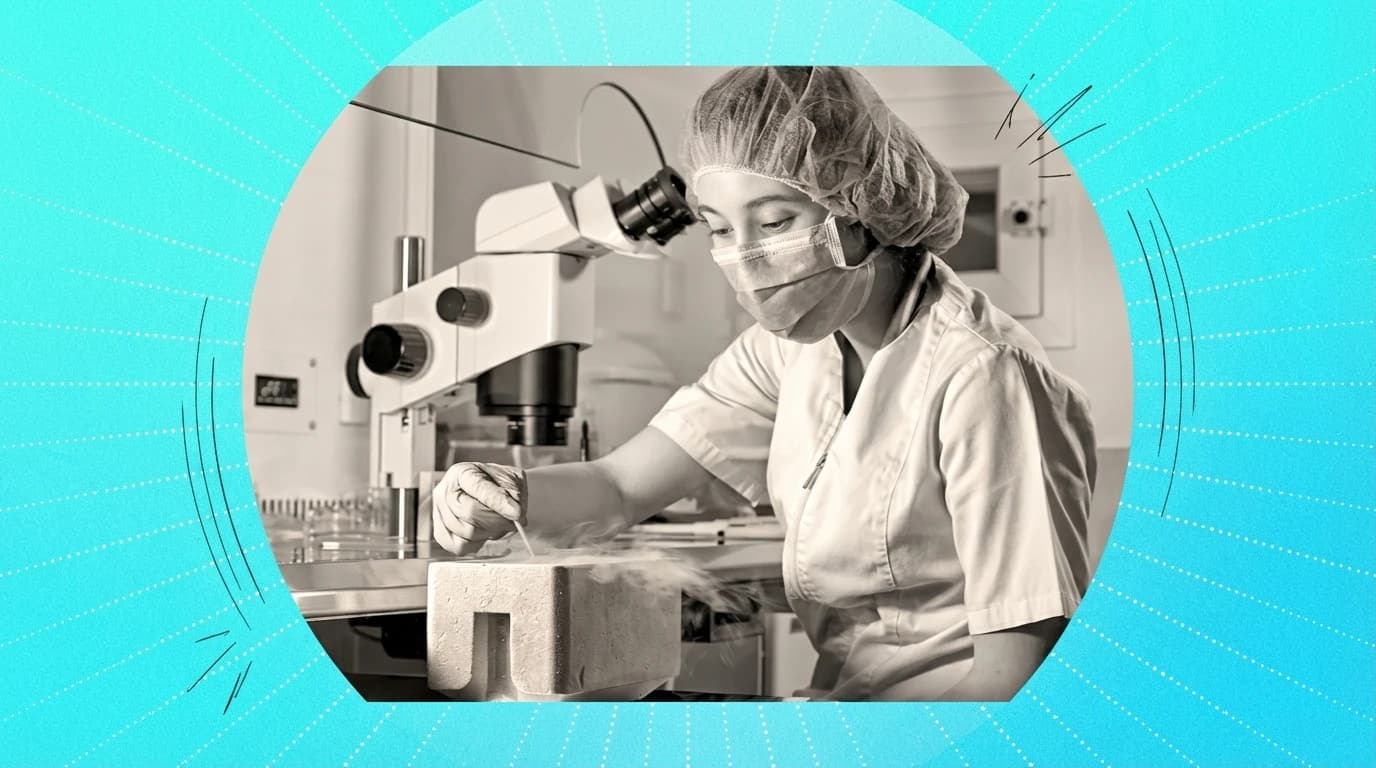
Sperm samples are collected from the male partner or a donor, then processed to isolate motile sperm for fertilization13 7. In cases of severe male factor infertility, sperm may be surgically retrieved from the testicles or epididymis7 .
Fertilization
Fertilization occurs in the laboratory by combining eggs and sperm in a controlled environment13 14. Two main methods are used:
- Conventional insemination: Eggs are incubated with thousands of sperm, allowing natural penetration and fertilization13 14.
- Intracytoplasmic sperm injection (ICSI): A single sperm is directly injected into each mature egg, used especially for male factor infertility or previous fertilization failure13 717.
Fertilization rates vary but typically range from 65% to 80% of mature eggs17 .
Embryo Development
After fertilization, embryos are cultured in the laboratory for 3 to 5 days, progressing from cleavage stages to the blastocyst stage13 1417. Embryologists monitor embryo quality and development to select the best embryos for transfer or freezing4 14. Approximately 50% of fertilized eggs reach the blastocyst stage suitable for transfer17 .
Genetic Testing of Embryos
Preimplantation genetic testing (PGT) can be performed on embryos to screen for chromosomal abnormalities or specific genetic disorders4 218. This involves removing a few cells from the embryo at day 3 to 5 and analyzing their genetic material18 . PGT helps reduce the risk of passing inherited diseases and may improve implantation rates4 2.
Embryo Transfer
Embryos are transferred into the uterus using a thin catheter inserted through the cervix under ultrasound guidance13 1417. Transfer may occur at the cleavage stage (day 3) or blastocyst stage (day 5), with blastocyst transfer generally associated with higher live birth rates and lower multiple pregnancy risk19 4.
Embryo transfer can be:
- Fresh: Performed within the same cycle as egg retrieval.
- Frozen embryo transfer (FET): Embryos are cryopreserved and transferred in a subsequent cycle, allowing uterine recovery and reducing risks such as ovarian hyperstimulation syndrome (OHSS) 20.
Cryopreservation of Eggs or Embryos
Excess embryos or unfertilized eggs can be frozen (cryopreserved) for future use11 1217. Cryopreservation allows patients to preserve fertility, delay childbearing, or undergo multiple embryo transfers without repeated ovarian stimulation11 12. Advances in freezing techniques have improved survival rates of thawed eggs and embryos21 .
IVF Treatment Outcomes
IVF aims to achieve successful fertilization, embryo implantation, and ultimately a live birth13 22. After embryo transfer, pregnancy is confirmed by measuring serum hCG levels approximately 9 to 14 days later15 4. hCG levels below 5 IU/L indicate no pregnancy, while levels above 10 IU/L suggest pregnancy requiring further confirmation15 4.
Patients receive counseling and follow-up care based on test results to monitor pregnancy progression or plan subsequent IVF cycles if needed15 4.
Interpreting Your Results
- Positive hCG test indicates biochemical pregnancy; further ultrasounds confirm clinical pregnancy and fetal viability15 4.
- Negative hCG test suggests no implantation; patients may discuss options for subsequent IVF cycles15 4.
- Multiple IVF cycles may be necessary to achieve pregnancy, especially in older patients or those with complex infertility factors15 4.
IVF Success Rates
Success rates of IVF vary widely depending on patient characteristics, especially maternal age15 4. Using autologous (own) eggs, live birth rates per cycle in the U.S. are approximately:
| Age Group | Live Birth Rate per Cycle |
|---|---|
| Under 35 years | ~45% |
| 35 to 37 years | ~34% |
| 38 to 40 years | ~22% |
| 41 to 42 years | ~11% |
| Over 42 years | ~3% |
Use of donor eggs or embryos may improve success rates in older women or those with diminished ovarian reserve15 4.
Other factors influencing outcomes include:
- Cause of infertility
- Ovarian reserve and response to stimulation
- Embryo quality
- Clinic expertise and protocols15 4
The Society for Assisted Reproductive Technology (SART) provides predictive tools to estimate individualized success probabilities15 4.
IVF Risks and Complications
While IVF is generally safe, it carries potential risks and complications that patients should consider15 423. These include:
- Multiple pregnancies: Transferring multiple embryos increases the risk of twins or higher-order multiples, which are associated with higher maternal and neonatal complications15 4.
- Ovarian hyperstimulation syndrome (OHSS): A rare but serious reaction to ovarian stimulation drugs causing abdominal pain, bloating, nausea, and in severe cases, respiratory distress requiring hospitalization23 20.
- Surgical risks: Egg retrieval is a minor surgical procedure with possible bleeding, infection, or damage to surrounding organs15 4.
- Ectopic pregnancy: Implantation of the embryo outside the uterus, a nonviable and potentially life-threatening condition requiring medical intervention15 4.
- Increased risks for IVF-conceived infants: Slightly higher incidence of preterm birth and low birth weight compared to naturally conceived infants20 24.
Careful monitoring, individualized treatment protocols, and limiting the number of embryos transferred help minimize these risks25 23.
“IVF is an ART procedure involving fertilization of eggs outside the body. It is used for infertility treatment, fertility preservation, and family building by diverse populations.”
— Jennifer Choe and Anthony L. Shanks26
IVF Summary
Since its inception in 1978, IVF has evolved into a highly effective assisted reproductive technology, enabling millions worldwide to conceive2 27. It addresses a broad spectrum of infertility causes and supports fertility preservation and diverse family structures3 228. Success rates depend largely on maternal age and other individual factors, with multiple IVF cycles often needed to achieve pregnancy15 4. Despite some risks, IVF remains a hopeful and transformative option for those facing challenges with natural conception.