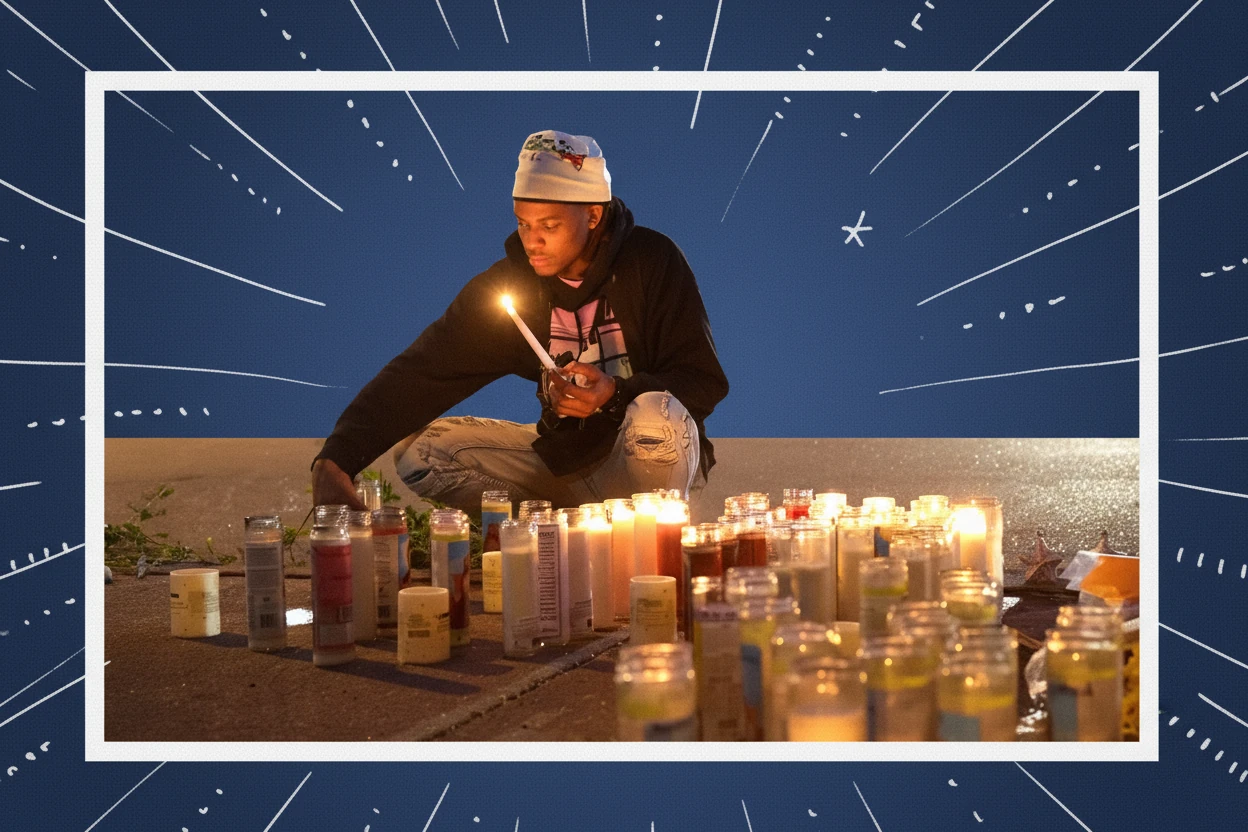
The United States experiences firearm violence at levels far exceeding those of other developed countries, making it a significant and preventable public health crisis1 . Despite common beliefs, mental illness is a weak risk factor for violence, and most firearm-related violence is driven by other factors1 . Understanding the complex relationship between mental health and gun violence is crucial to developing effective policies and reducing stigma2 .
“The short version is that while people with serious mental illness are slightly more likely to commit acts of violence than people without mental illness, the risk that it creates is pretty small compared to other known risk factors. For example, current substance abuse.”
— Joel Dvoskin, University of Arizona College of Medicine12
Mental Illness as a Scapegoat for Gun Violence
Mental illness has often been unfairly blamed as the primary cause of gun violence, especially mass shootings. Media coverage frequently implicates mental illness as the root cause and suggests gun restrictions for people with mental health conditions as a solution3 . This narrative oversimplifies a complex issue and reinforces stigma and misconceptions about mental illness3 .
Exposure to interpersonal gun violence leads to increased rates of post-traumatic stress disorder, depression, and substance use, especially among youth. The mental health consequences extend beyond immediate injury and contribute to ongoing community trauma19 .
Epidemiologic evidence shows that mental illness accounts for only a small subset of gun violence cases4 . In fact, fewer than 20% of mass shooters have diagnosable severe mental illnesses that impair cognitive functions or mood regulation2 5. Many mass shootings are instead influenced by social and cultural factors such as alienation, hate, and acute stressors6 . Retrospective mental health assessments of shooters are often difficult due to lack of prior documentation, which complicates understanding the true role of mental illness7 .
The harmful consequences of this scapegoating include increased discrimination against people with mental health conditions and reduced willingness among affected individuals to seek care4 8. This stigma exacerbates public health challenges and detracts attention from more effective violence prevention strategies.
- Media narratives often link gun violence to mental illness, reinforcing stigma3 .
- Severe mental illness is present in fewer than 20% of mass shooters2 5.
- Social and cultural factors, including hate and alienation, play significant roles6 .
- Retrospective mental health diagnoses in shooters lack reliability without prior records7 .
- Stigma from this link discourages mental health care seeking and increases discrimination4 8.
“Mental illness is a weak risk factor for violence despite popular misconceptions reflected in the media and policy.”
— John S Rozel, University of Pittsburgh School of Medicine1
Mental Health and Mass Shootings in the US
Mass shootings are a tragic and highly visible form of gun violence, but they represent a small fraction of overall firearm-related deaths. The Gun Violence Archive recorded 693 mass shootings in 2021 and 213 in 2023, defined as incidents with four or more people killed or injured6 . Despite this, mass shootings account for about 1% or less of all firearm violence, with suicides causing twice as many deaths as homicides1 .
Research consistently shows that serious mental illness, especially psychosis, is not a key factor in most mass shootings or mass murders. Approximately 5% of mass shootings are related to severe mental illness, while about 25% are associated with non-psychotic psychiatric or neurological illnesses such as depression, and 23% with substance use disorders, though these are often incidental9 . Many mass shooters do not have any diagnosed mental illness or history of substance use or criminality9 .
The media often portrays gun violence as primarily caused by mental illness, but epidemiologic studies show that most people with serious mental illnesses are never violent. This misconception fuels stigma and distracts from addressing the true causes of gun violence22 23.
The prevalence of mental illness in the US is similar to that in other developed countries, yet the US experiences uniquely high firearm homicide rates, indicating that factors beyond mental health—such as firearm access policies and social determinants—play a larger role in gun violence6 10. Laws that enable firearm access during emotionally charged moments correlate more strongly with gun violence than mental illness alone6 11.
| Aspect | Data/Fact | Source(s) |
|---|---|---|
| % mass shooters with severe mental illness | Fewer than 20% have diagnosable disorders impairing reasoning or mood regulation | 25 |
| Mass shootings in 2021 | 693 incidents | 6 |
| Mass shootings in 2023 | 213 incidents with 4+ killed or injured | 6 |
| Mental illness prevalence | Similar in US and other countries | 610 |
| Impact of firearm access laws | Stronger correlation with gun violence than mental illness alone | 611 |
- Mass shootings often involve middle-aged men responding to severe acute stressors rather than mental illness9 .
- Nearly half of mass shootings involve perpetrator suicide, with firearms being the most lethal method9 .
- Substance abuse is a more significant risk factor for violence than mental illness12 .
- People with serious mental illness are more likely to be victims rather than perpetrators of violence13 .
“But serious mental illness—specifically psychosis—is not a key factor in most mass shootings or other types of mass murder. Approximately 5% of mass shootings are related to severe mental illness.”
— Ragy Girgis, Columbia University Department of Psychiatry9
Dangers of Linking Mental Health to Shootings
“Indeed, if serious mental illnesses suddenly disappeared, violence would decrease by only about 4%. More than 90% of violent incidents, including homicides, would still occur.”
— Jeffrey Swanson, Duke University School of Medicine21
Linking mental illness directly to gun violence is dangerous because it oversimplifies a multifaceted issue and perpetuates stigma. Public opinion often assumes a direct causal link, but research shows mental illness alone is not a strong predictor of gun violence7 14. Firearm access policies have a more significant impact on gun violence rates than mental illness status11 .
💡 Did You Know?
The United States has substantially higher levels of firearm violence than most other developed countries. Firearm violence is a significant and preventable public health crisis1 .
Stigmatization from associating mental illness with violence discourages individuals from seeking mental health care, which worsens public health outcomes4 8. National organizations such as the National Alliance on Mental Illness (NAMI) emphasize that mental illness is not the root cause of gun violence and advocate for comprehensive policy and community-based interventions2 15.
Violence determinants include social, economic, and cultural factors beyond mental illness, and repeated mass shootings occur amid insufficient legislative responses addressing these root causes16 17. Exposure to gun violence itself causes trauma and toxic stress, contributing to the development of some mental illnesses and perpetuating a cycle of violence and mental health challenges18 19.
- Mental illness is not a strong predictor of gun violence; the relationship is complex14 .
- Firearm access laws have a greater impact on gun violence rates than mental illness11 .
- Stigma reduces mental health care seeking and increases discrimination4 8.
- Public narratives linking mental illness and violence exacerbate social isolation20 .
- NAMI stresses the need to focus on broader violence determinants and policy failures15 .