Psoriasis is a chronic autoimmune skin condition that causes the rapid buildup of skin cells, leading to thick, scaly patches on the skin1 . It affects millions worldwide and can present in various forms, each with distinct signs and symptoms2 . Early recognition of these symptoms is crucial for timely diagnosis and effective management3 . Understanding the different types of psoriasis and their characteristic features helps patients and healthcare providers identify the condition early and tailor treatment accordingly4 .
Plaque Psoriasis Signs
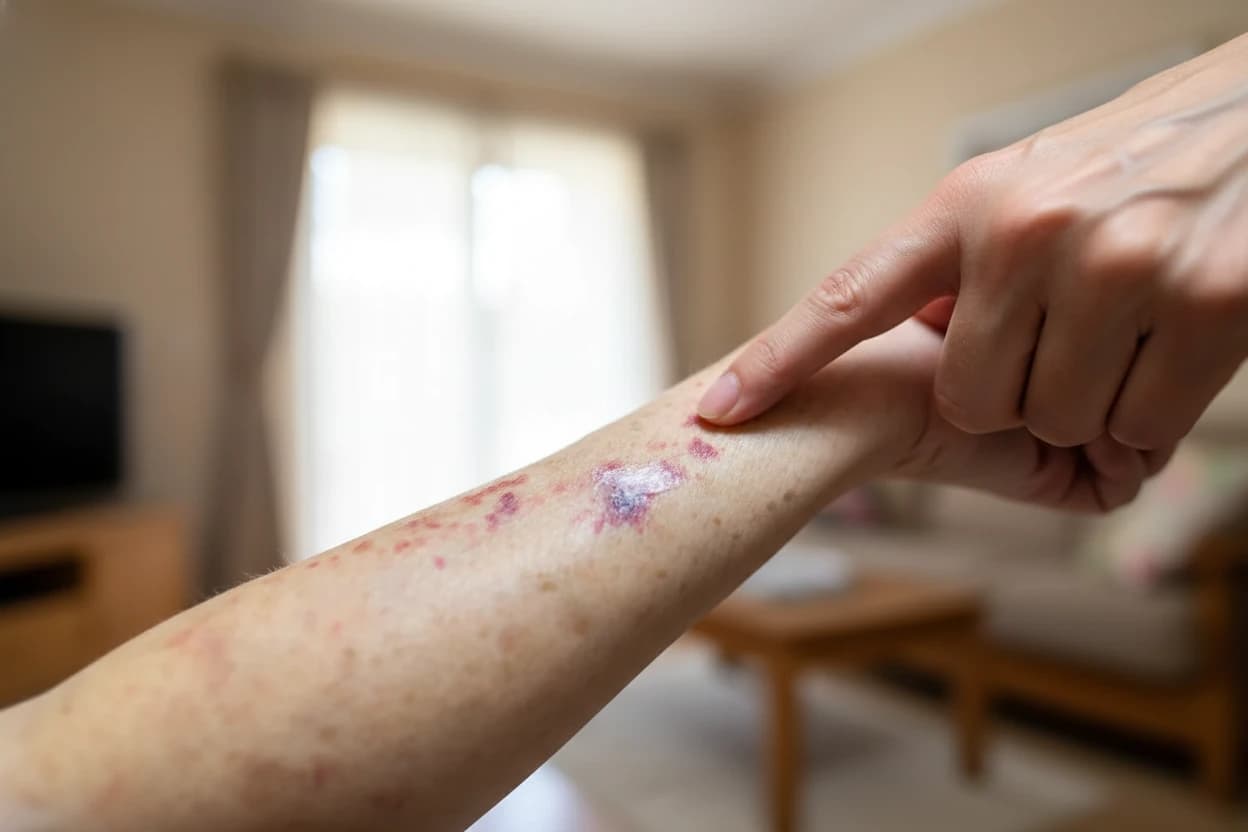
Plaque psoriasis is the most common form, affecting 80–90% of people with psoriasis5 . It is characterized by dry, raised patches of skin called plaques, which are often covered with silvery-white scales3 . These plaques can vary in size from small spots to large areas and are typically symmetrically distributed3 . The affected skin appears pink or red in lighter skin tones and purple or brown in darker skin tones3 . Common sites include the elbows, knees, scalp, and lower back3 .
Nail involvement, known as nail psoriasis, occurs in up to 50% of patients with plaque psoriasis3 . Symptoms of nail psoriasis include pitting (tiny dents in the nails), onycholysis (nail lifting), and subungual hyperkeratosis (buildup of skin cells under the nail) 3. These nail changes can cause discomfort and may signal the presence of psoriatic arthritis3 .
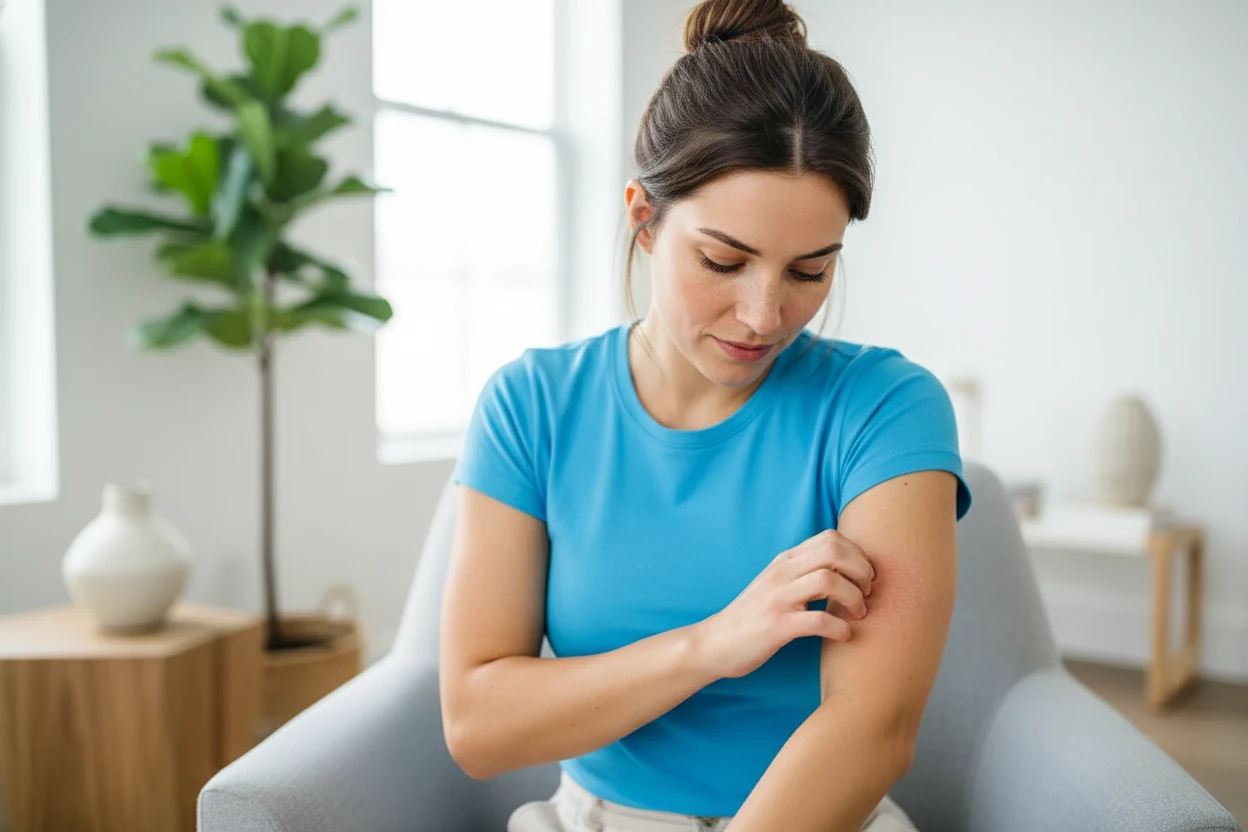
Patients often report dry, cracked skin that may bleed and cause itching or pain6 . Scratching can worsen the plaques by causing thickening or secondary infection1 . Early signs include small bumps that grow into scaly plaques, which shed layers of skin flakes1 .
- Plaque psoriasis causes dry, raised skin patches covered with silvery-white scales3 .
- Lesions are usually symmetrically distributed and can range from small to large3 .
- Common affected areas include elbows, knees, scalp, and lower back3 .
- Nail psoriasis affects up to half of plaque psoriasis patients, causing pitting and nail separation3 .
- Dry, cracked skin with itching and pain is common6 .
Guttate Psoriasis Signs
Guttate psoriasis is less common, affecting about 8% of psoriasis patients3 . It often has an acute onset and is more frequent in children and young adults3 . This type is typically triggered by streptococcal infections such as strep throat3 .
Guttate psoriasis presents as small, drop-like (or coin-shaped) red papules covered with fine scales3 . These lesions commonly appear on the trunk, limbs, and sometimes the scalp3 . The spots are usually salmon-colored to pink and may clear within weeks or months, sometimes without treatment4 . However, guttate psoriasis can persist or evolve into plaque psoriasis later in life4 .
- Guttate psoriasis causes small, red, scaly, drop-shaped papules3 .
- It often starts suddenly, especially after streptococcal infections3 .
- Lesions primarily affect the trunk, arms, legs, and sometimes scalp3 .
- More common in children and young adults3 .
- The condition may clear spontaneously or progress to plaque psoriasis4 .
Inverse Psoriasis Signs
Inverse psoriasis affects approximately 21–30% of psoriasis patients3 . It occurs in skin folds where skin touches skin, such as the armpits, groin, under the breasts, and around the buttocks3 . Unlike plaque psoriasis, inverse psoriasis presents as smooth, red, inflamed patches without the typical scaling3 .
The lesions are often moist due to the location in intertriginous (skin fold) areas and can be exacerbated by sweating, friction, and moisture3 . In lighter skin tones, the patches appear pink or red, while in darker skin tones they may look dark red, purple, or brown3 . The affected skin may be sore or painful7 .
- Inverse psoriasis causes smooth, red, inflamed patches in skin folds3 .
- Lesions lack the silvery-white scales seen in plaque psoriasis3 .
- Common sites include armpits, groin, under breasts, and buttocks3 .
- Sweating, friction, and moisture worsen symptoms3 .
- Color varies by skin tone: pink/red in lighter skin, dark red/purple/brown in darker skin3 .
Pustular Psoriasis Signs
Pustular psoriasis is a rare form, affecting about 3% of psoriasis patients3 . It is characterized by painful, hard bumps filled with sterile (non-infectious) pustules containing white or yellow pus3 . These pustules are surrounded by erythematous (red), inflamed skin3 .
Pustular psoriasis commonly affects the palms of the hands and soles of the feet, causing significant discomfort and impairing daily activities such as walking or typing3 . The skin may also show brown dots or scaling as pustules dry7 . Generalized pustular psoriasis is a severe, potentially life-threatening variant with widespread pustules and systemic symptoms8 .
- Pustular psoriasis presents with painful, pus-filled bumps on red, inflamed skin3 .
- Pustules are sterile and contain white or yellow pus3 .
- Commonly affects hands and feet, impairing daily functions3 .
- The skin may develop brown dots and scales as pustules dry7 .
- Generalized pustular psoriasis is a severe form requiring urgent care8 .
Erythrodermic Psoriasis Signs
Erythrodermic psoriasis is the rarest and most severe form, affecting about 2% of psoriasis patients3 . It is a potentially life-threatening condition involving widespread inflammation and peeling of the skin over most of the body3 . The rash typically appears red or brown and can cause intense itching and burning3 .
Patients may experience systemic symptoms such as chills, fever, muscle weakness, and fluctuating body temperature3 . Erythrodermic psoriasis often develops from a pre-existing psoriasis type, especially when psoriasis worsens or does not respond to treatment3 . Untreated, it can lead to serious complications including dehydration, heart failure, and hypothermia3 .
- Erythrodermic psoriasis causes widespread red or brown inflamed skin with peeling3 .
- It is a severe, potentially life-threatening condition requiring immediate medical attention3 .
- Symptoms include chills, fever, muscle weakness, and severe itching3 .
- Usually develops from worsening or poorly controlled psoriasis3 .
- Untreated cases risk dehydration and heart failure3 .
When to See a Doctor
It is important to seek medical care if you suspect psoriasis or if your skin condition worsens or spreads3 . Immediate medical attention is necessary for severe forms like erythrodermic psoriasis due to the risk of life-threatening complications3 .
Consult a healthcare provider if you experience:
- New or changing skin lesions that do not improve3 .
- Widespread or painful rash affecting daily activities3 .
- Signs of infection such as severe pain, swelling, or fever1 .
- Nail changes like pitting or separation from the nail bed3 .
- Joint pain or stiffness that may indicate psoriatic arthritis9 .
Early diagnosis and treatment can help manage symptoms and prevent complications3 . A dermatologist can perform a physical exam and may order additional tests, such as a skin biopsy, to confirm the diagnosis3 .
Psoriasis Symptoms Summary
Psoriasis symptoms vary by subtype but commonly include raised, inflamed, and discolored skin patches3 . Early signs often involve dry, itchy skin with scaling and redness3 . The plaques may appear pink or red in lighter skin and purple or brown in darker skin tones3 . Nail involvement is frequent, especially in plaque psoriasis, and can manifest as pitting or nail separation3 .
Symptoms can range from mild localized plaques to severe widespread rashes with systemic symptoms3 . Psoriasis can also cause pain, burning, and discomfort, affecting quality of life10 . Recognizing the different presentations helps guide appropriate treatment.
- Raised, scaly plaques are common in most psoriasis types3 .
- Early signs include skin rash, scaling, and itching3 .
- Nail changes such as pitting and onycholysis are frequent3 .
- Symptoms vary in color depending on skin tone3 .
- Pain and discomfort may accompany skin lesions10 .
Psoriasis FAQs
Psoriasis is an autoimmune condition characterized by accelerated skin cell turnover, leading to plaque formation3 . It is not contagious and cannot be transmitted through physical contact4 . Early diagnosis and treatment are important to manage symptoms and reduce the risk of complications such as psoriatic arthritis3 .
Common early signs include skin rash and scaling, with plaques appearing red in lighter skin and purple or brown in darker skin3 . Dry, itchy skin is also typical3 . Psoriasis in HIV-positive individuals may be more severe and less responsive to treatment, but psoriasis itself is not a definitive indicator of HIV infection3 .
- Psoriasis is caused by an overactive immune system leading to rapid skin cell growth3 .
- It is not contagious and cannot be caught from others4 .
- Early signs include red or discolored scaly patches and dry, itchy skin3 .
- Nail changes may occur even without skin lesions3 .
- Psoriasis severity can vary, and treatment options are available3 .
“Psoriatic arthritis, like psoriasis, has a possible genetic predisposition and can flare and subside.”
— Dr. Lonowski, Nebraska Medicine13
Common Psoriasis Questions
-
Is psoriasis contagious? No, psoriasis is not contagious and cannot be transmitted by touch4 .
-
What causes psoriasis flare-ups? Flare-ups can be triggered by infections, stress, certain medications, skin injury, and environmental factors11 .
-
Can psoriasis affect nails and joints? Yes, nail psoriasis affects about half of plaque psoriasis patients, and up to 30% may develop psoriatic arthritis causing joint pain and swelling9 .
-
What are common locations for psoriasis? Psoriasis often affects elbows, knees, scalp, lower back, and skin folds3 .
-
Is there a cure for psoriasis? Currently, there is no cure, but treatments can effectively manage symptoms and improve quality of life3 .