Red light therapy is an increasingly popular noninvasive treatment that uses low-level red or near-infrared light to stimulate cellular processes and improve skin and tissue health1 2. It is widely accessible in both clinical and home settings and is being explored for benefits ranging from skin rejuvenation to pain relief1 2. While promising, red light therapy requires further research to establish standardized protocols and confirm long-term safety3 4.
How Red Light Therapy Works
Red light therapy works through a process called photobiomodulation (PBM), which primarily targets cytochrome c oxidase in mitochondria—the energy-producing structures in cells5 6. Exposure to red (600–700 nm) and near-infrared (700–1000 nm) light enhances mitochondrial function by increasing adenosine triphosphate (ATP) production, the main energy source for cellular activities5 67. This boost in energy improves cellular metabolism, promotes tissue repair, and reduces inflammation by modulating reactive oxygen species and nitric oxide release5 67.
Red and near-infrared wavelengths are particularly effective because they penetrate deeper into tissues compared to other visible light wavelengths and are efficiently absorbed by mitochondrial chromophores9 56. These effects have been observed in various tissues, including skin, ocular, neurological, and musculoskeletal systems1 114.
Types of Red Light Therapy
Red light therapy can be delivered through various devices that differ in light source, wavelength, and application method12 213:
- LED Devices: Most common for home use, these emit low-level red or near-infrared light without heat, making them safe and nonthermal12 213.
- Low-Level Lasers: Often used in clinical settings, these provide more focused and powerful light but require professional operation12 13.
- Combination Devices: Some therapies use both LEDs and lasers to target different tissue depths or enhance treatment effects12 13.
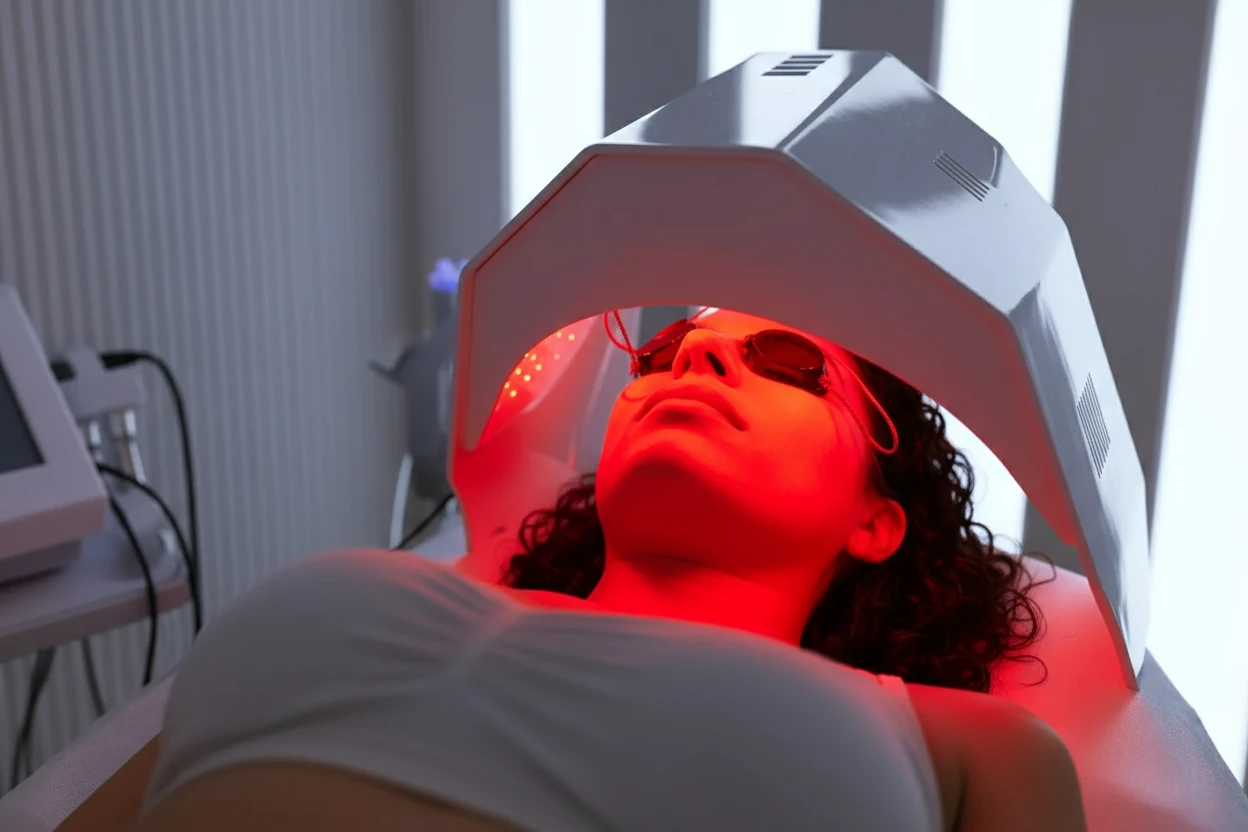
Devices vary from small handheld wands and face masks to full-body beds and panels, allowing targeted or whole-body treatment depending on the condition12 213.
Health Benefits of Red Light Therapy
Red light therapy has demonstrated potential benefits in several health areas, especially dermatology, neurology, and musculoskeletal conditions14 4.
- Skin Rejuvenation: It stimulates collagen production and skin cell proliferation, improving skin texture, reducing fine lines, wrinkles, and signs of photoaging1 1516.
- Hair Regrowth: Repeated treatments promote hair follicle activity and increase hair thickness in androgenetic alopecia, a common hereditary hair loss condition18 1920.
- Wound Healing: Red light therapy accelerates chronic wound repair by promoting angiogenesis and cellular proliferation21 22.
- Inflammatory Skin Diseases: It reduces inflammation and modulates immune responses in conditions like psoriasis and herpes labialis14 22.
- Neurological and Cognitive Benefits: Emerging research suggests improvements in cognitive function and symptom relief in dementia patients after transcranial and intranasal red light therapy23 24.
- Pain and Musculoskeletal Conditions: Red light therapy may reduce pain and inflammation in conditions such as knee osteoarthritis, tendinopathy, and temporomandibular disorders, enhancing function and quality of life25 426.
“The dilation of blood vessels enables more blood and nutrients to reach the hair follicles. Used over multiple months consistently, red light has been shown to regrow thinning hair.”
— Zakia Rahman, MD, Stanford Medicine20
Red Light Therapy Effectiveness
The effectiveness of red light therapy varies depending on the condition treated and treatment parameters. Systematic reviews and clinical trials indicate:
- Skin and Acne: Repeated use can produce sustained improvements in skin texture and reduce inflammatory acne lesions, though it is less effective for non-inflammatory acne types22 1610.
- Hair Loss: Low-level red light therapy is effective for androgenetic alopecia, with some studies showing comparable results to minoxidil18 1924.
- Pain and Inflammation: Evidence supports short-term pain relief in musculoskeletal conditions, but benefits may diminish after treatment ends4 26.
- Cognition: Preliminary studies in dementia show promise, but larger controlled trials are needed to confirm benefits23 24.
However, many studies have small sample sizes, lack placebo controls, or are limited to animal or in vitro models, highlighting the need for larger randomized controlled trials1 48. Treatment protocols vary widely, and individual responses depend on skin type, condition severity, and device parameters14 22.
It's very interesting and deserves further study, but for now, the data is somewhat conflicting and there are a lot of caveats.
Maintenance treatments are often necessary to sustain benefits, especially for skin aging and hair regrowth22 16.
Choosing a Red Light Therapy Device
Selecting the right red light therapy device depends on the treatment goal, device power, wavelength, and safety features. Devices range from professional clinical units to at-home consumer products12 213.
- Clinical Devices: More powerful lasers and LED panels used by professionals offer stronger light doses and may produce faster results20 13.
- At-Home Devices: These include masks, wands, caps, and panels with lower power output, suitable for regular use but may require longer treatment periods12 213.
When choosing a device, consider:
- The specific condition you want to treat (skin, hair, pain, etc.) 27.
- Device wavelength and power output appropriate for your needs12 5.
- Safety certifications such as FDA clearance27 13.
- User reviews and manufacturer reputation27 .
Foreo UFO 2
The Foreo UFO 2 is a popular at-home red light therapy mask designed for facial skin treatment. It combines red LED light with other technologies like thermal and sonic therapy to enhance skin rejuvenation. It is typically used for reducing wrinkles, improving skin texture, and promoting collagen production13 .
Solawave Bye Acne: 3-Minute Pimple Spot Treatment
Solawave Bye Acne is a handheld device that delivers red light therapy targeted at acne lesions. It aims to reduce inflammation and bacterial load in acne-prone skin, offering a quick and convenient treatment option for spot therapy13 .
Red Light Therapy Side Effects and Risks
Red light therapy is generally safe and well tolerated with minimal side effects reported in healthy individuals3 24. Unlike ultraviolet (UV) light, it does not cause DNA damage or increase skin cancer risk12 22.
The treated subjects experienced significantly improved skin complexion and skin feeling, profilometrically assessed skin roughness, and ultrasonographically measured collagen density. The blinded clinical evaluation of photographs confirmed significant improvement in the intervention groups compared with the control.
Potential risks include:
- Skin Redness and Irritation: Some users, especially those with darker skin types, may experience erythema or pigmentation changes9 10.
- Burns or Blistering: Rare cases of burns have been reported with improper use or prolonged exposure13 .
- Eye Damage: Direct exposure to red light can harm the eyes; protective eyewear is recommended during treatment13 .
- Reactivation of Scar Tissue: There are isolated reports of scar tissue inflammation following therapy, which resolved with treatment modification28 .
- Unknown Long-Term Effects: More research is needed to establish long-term safety and optimal dosing guidelines3 4.
People with photosensitive conditions or those taking photosensitizing medications should consult a healthcare provider before use27 13.
There's real evidence that shows red light can change biology, but that's not the same as saying it's some kind of panacea for many different health conditions.
Red Light Therapy Alternatives
For skin and chronic conditions, holistic and complementary approaches may be considered alongside or instead of red light therapy8 17:
- Lifestyle Modifications: Adequate sleep, regular exercise, and a diet rich in antioxidants and anti-inflammatory foods support skin and systemic health8 17.
- Psychological Therapies: Psychotherapy can help manage anxiety and depression, which may indirectly benefit skin and pain conditions8 17.
- Complementary Modalities: Acupuncture and cupping have shown benefits in pain relief and circulation enhancement8 17.
- Conventional Treatments: Topical medications, laser therapies, and other dermatological procedures remain standard for many skin conditions27 .
Consultation with healthcare professionals is recommended to tailor treatment plans and explore safe alternatives1 2.
Red Light Therapy Summary
Red light therapy uses red and near-infrared light to stimulate mitochondrial activity, promoting cellular repair, collagen production, and inflammation reduction12 25. It has demonstrated benefits in dermatology, hair regrowth, wound healing, pain management, and cognitive function, though many applications require further validation through large-scale clinical trials1 420.
The therapy is generally safe with minimal side effects but requires proper device selection and usage guidance, especially for individuals with darker skin or photosensitive conditions3 927. Maintenance treatments are often necessary to sustain benefits, and consultation with medical professionals is advised before starting therapy3 227.