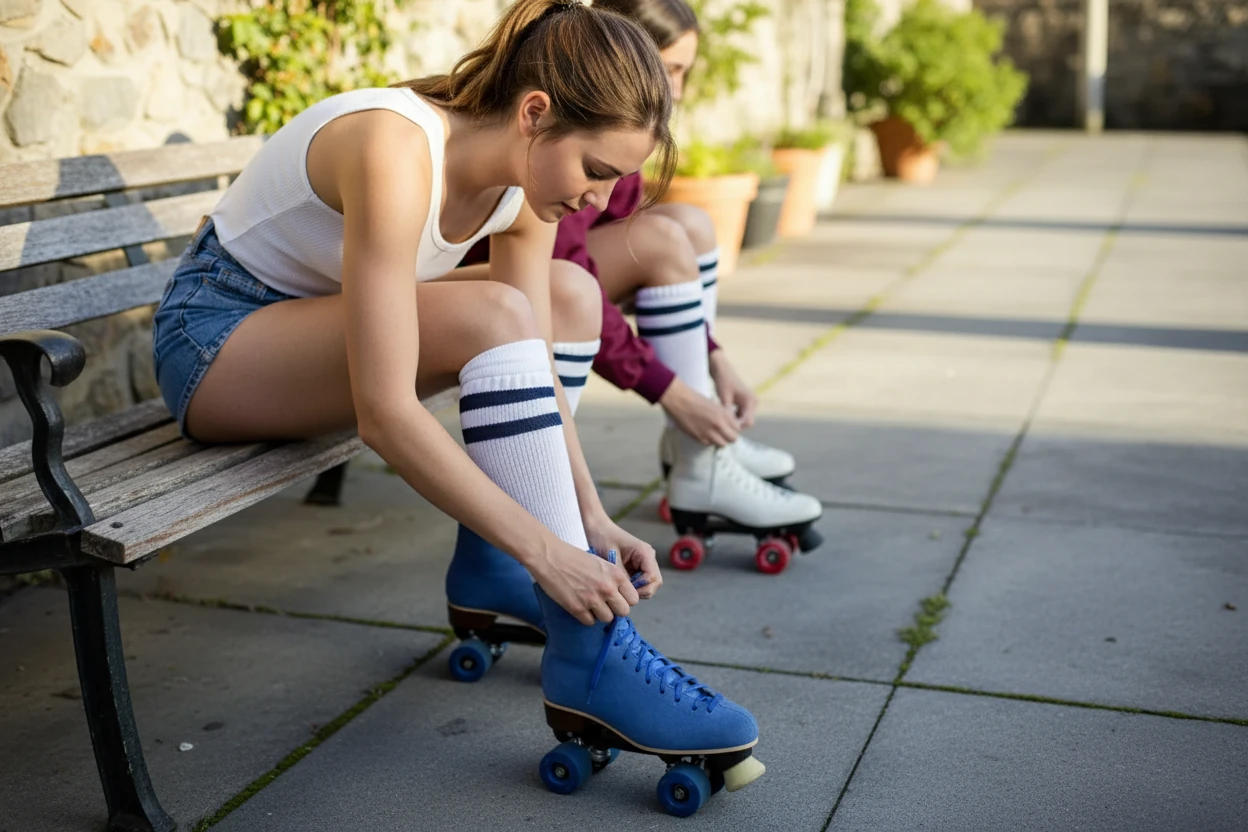
Roller skating has gained popularity again, offering a fun way to improve both physical and mental health. This activity engages nearly every muscle in the body, especially the lower limbs, while being gentle on the joints1 . Skating regularly can burn significant calories, strengthen the heart, and boost overall fitness2 . Beyond physical benefits, roller skating also supports mental well-being by reducing stress and enhancing mood3 .
The Resurgence of Roller Skating
Roller skating has experienced a notable resurgence in recent years, driven partly by social media trends and the COVID-19 pandemic encouraging outdoor, solo activities1 . While many perceive this as a sudden comeback, skating has actually been growing steadily over the past decade, with a sharper increase in the last 2–3 years1 . This renewed interest has made roller skating more accessible and socially engaging, attracting people of all ages.
The rise in popularity is also linked to the activity’s versatility and appeal as a low-impact aerobic exercise. It offers a unique blend of fitness and recreation, combining cardiovascular benefits with skill development and social interaction1 . This has helped roller skating transition from a niche pastime to a mainstream fitness option.
“There's an impression that skating is 'coming back,' which is true in some sense, but it's actually been on the rise for about 10 years slowly and then picked up within the past 2-3 years.”
— Arnav "Sonic" Shah, multidisciplinary skate artist and teacher1
Roller Skating as Effective Exercise
Roller skating is an effective form of aerobic exercise that raises the heart rate and breathing, which strengthens the heart and improves cardiovascular health4 . This full-body aerobic activity engages multiple muscle groups, enhancing muscular endurance and coordination4 . It typically burns between 5 to 8 calories per minute, depending on intensity and body weight, with an average burn of about 6 to 7 calories per minute during skating4 1.
The exercise intensity of roller skating is comparable to other moderate aerobic activities, with an intensity rating around 7 metabolic equivalents (METs), similar to group cycling or moderate rowing5 . A 160-pound person skating for 30 minutes can burn approximately 267 calories, while some sources estimate up to 300 calories burned in that time frame2 5. This calorie expenditure supports weight management and fat loss.
Muscle activation during roller skating is substantial, especially in the lower body. Key muscles worked include the quadriceps, hamstrings, gluteals, calves, and hip abductors6 72. The core muscles, including the abdominals, obliques, and erector spinae, are also engaged to maintain balance and posture2 5. The arms and shoulders contribute to balance and momentum, although their involvement is less intense than the lower body8 2.
“Roller skating absolutely can be good exercise. It can improve your strength, balance, core stability, and cardiovascular endurance.”
— Danielle Hildreth, RN, CPT, Registered Nurse, Certified Personal Trainer5
- Increases heart rate and oxygen uptake, strengthening the heart muscle4
- Raises HDL (good) cholesterol, which helps protect cardiovascular health4
- Burns calories efficiently, aiding in weight management4 1
- Engages multiple muscle groups, improving endurance and coordination4
- Low-impact nature reduces joint stress compared to running or other high-impact sports2 5
Key Health Benefits of Roller Skating
Roller skating offers a wide range of health benefits that extend beyond cardiovascular fitness. It is a low-impact exercise, making it suitable for people with chronic joint pain, arthritis, or fibromyalgia, as it reduces stress on the joints while still providing effective aerobic conditioning4 1. This makes skating an excellent alternative to running or walking for those seeking joint-friendly workouts.
Skating activates major lower limb muscles including the quadriceps, hamstrings, gluteals, and calves, which helps build strength and endurance6 7. The gluteus maximus and medius are particularly engaged during the push-off phase, contributing to better body stability and potentially reducing back pain caused by muscular imbalances5 . Core muscles are also strengthened as they work to maintain balance and posture throughout the activity2 5.
Regular roller skating improves cardiovascular health by increasing heart rate and improving blood flow, which can help stabilize blood pressure2 . It also enhances the body's ability to regulate insulin sensitivity, reducing the risk of type 2 diabetes9 . Aerobic exercise like skating promotes fat oxidation and improves lipid profiles by increasing HDL cholesterol, which lowers cardiovascular risk4 1.
Incorporating roller skating into a fitness routine can significantly improve mental health. The combination of physical activity, social interaction, mindfulness, and the enjoyment of skating helps reduce stress, enhance mood, and boost overall psychological well-being3 10. Skating releases endorphins, the body's natural "feel-good" chemicals, which can help alleviate symptoms of anxiety and depression2 .
- Enhances balance, coordination, and agility through synchronized full-body movement2
- Builds muscle definition in abs, glutes, thighs, and calves2
- Supports weight loss while preserving joint health11
- Improves posture and core stability, reducing injury risk in daily activities12
- Provides a fun, engaging way to stay active and motivated1 11
💡 Did You Know?
Roller skating engages about 90% of your body, including lower limbs, back, and abdominal muscles, contributing to overall stability and fitness11 .
Potential Risks and Safety Concerns
While roller skating is generally safe and low-impact, there are risks primarily related to falls and injuries. The most common injuries include cuts, scrapes, wrist sprains, and fractures, often resulting from falls13 145. Head injuries, including concussions, can occur if protective gear is not worn13 14.
- Always wear comprehensive protective equipment: helmet, wrist guards, elbow pads, knee pads, and padded bottoms13 141
- Warm up and stretch before skating, with special attention to the hamstrings, to reduce muscle strain and injury risk15 161
- Start slowly and practice basic skills such as moving forward and stopping before increasing speed or attempting advanced maneuvers5
- Consider professional coaching to improve technique and safety14 1
- Avoid skating during pregnancy due to balance challenges and fall risk5
Roller skating’s low-impact nature reduces joint stress, making it suitable for individuals with chronic musculoskeletal conditions such as arthritis4 . Low-intensity steady-state exercise like skating promotes fat oxidation, endurance, and metabolic efficiency, supporting long-term health4 .
“Rollerblades feature wheels next to one another in a single line (hence the name in-line skating), roller skates feature two rows of wheels.”
— Marissa Miller, ACE-certified personal trainer12
Summary of Roller Skating Benefits
Roller skating is a comprehensive, low-impact aerobic exercise that strengthens the heart, burns calories, and engages nearly every muscle in the body, especially the lower limbs and core1 2. It improves cardiovascular and metabolic health by raising HDL cholesterol and enhancing insulin sensitivity4 9. Skating also supports mental well-being by reducing stress and boosting mood through endorphin release and social interaction3 10.
The activity is accessible and suitable for people of various fitness levels, including those with joint pain or chronic muscle conditions, due to its low-impact nature4 1. Injury risks can be minimized with proper warm-up, stretching, protective gear, and coaching15 1314. Overall, roller skating offers a fun, effective way to improve physical fitness and mental health.
- Roller skating is a low-impact aerobic exercise that improves heart health and burns 6–7 calories per minute4 1.
- It strengthens major lower limb muscles and core, enhancing balance and coordination6 2.
- Skating supports metabolic health by improving insulin sensitivity and lipid profiles4 9.
- Mental health benefits include stress reduction, mood enhancement, and increased psychological well-being3 10.
- Safety measures such as protective gear and proper warm-up are essential to prevent injuries15 1314.