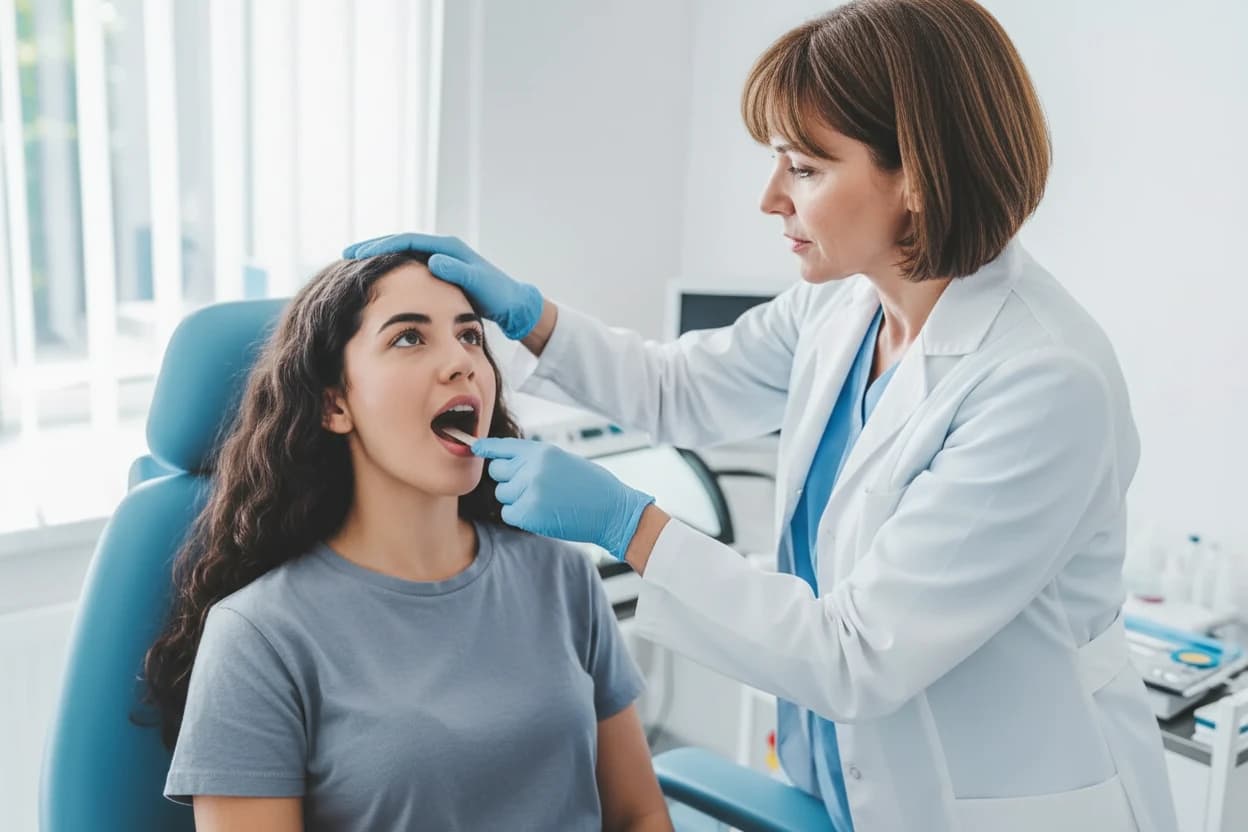
Thyroid nodules are very common, with up to half of adults having them detectable by ultrasound by age 45. Most of these nodules are benign and do not cause symptoms or increase cancer risk. However, a small percentage of thyroid nodules can be cancerous, making early detection and proper evaluation important for optimal outcomes1 2. Thyroid cancer is often found incidentally during routine exams or imaging for other reasons, as it usually does not cause symptoms in early stages3 4.
Thyroid Lumps Overview
Thyroid lumps, also known as thyroid nodules, are growths or lumps that develop within the thyroid gland, a small butterfly-shaped gland located at the base of the neck just below the Adam's apple. These nodules can be solid or fluid-filled (cystic) and vary in size5 6. They are frequently discovered during routine physical exams or incidentally on imaging tests such as ultrasound, CT, or MRI scans performed for unrelated reasons3 47.
Most thyroid nodules are benign (noncancerous), with approximately 90% to 95% of nodules falling into this category1 82. Many people with thyroid nodules do not experience any symptoms, and the nodules may remain unnoticed unless they grow large enough to be felt or seen as a lump in the neck3 6. When symptoms do occur, they may include:
- A visible or palpable lump in the neck9 6
- Difficulty swallowing (dysphagia) or breathing if the nodule compresses the esophagus or windpipe3 2
- Hoarseness or voice changes due to nerve involvement9 3
- Neck discomfort or pain9 3
Large nodules or multiple nodules can cause a visible enlargement of the thyroid gland, known as a goiter3 6. Some nodules may produce excess thyroid hormone, leading to symptoms of hyperthyroidism such as rapid heartbeat, weight loss, and nervousness6 2.
“Thyroid nodules are quite common in adults and may be found in up to two-thirds of Americans over the course of their lifetime. Most nodules (about 90%) are noncancerous (benign), but some can be cancerous (malignant). Thyroid nodules are less common in children and teens, but if a child or a teen has a nodule, it is more likely to be malignant.”
— Kaitlyn Frazier, M.D., Johns Hopkins Medicine1
Causes of Thyroid Lumps
Thyroid nodules arise due to abnormal growth of thyroid cells, but the exact cause of most nodules is unknown. Several conditions can lead to the formation of thyroid lumps, including:
- Overgrowth of thyroid tissue (thyroid adenoma): Benign growths of normal thyroid cells that can sometimes produce excess thyroid hormone6 2.
- Thyroid cysts: Fluid-filled or partly fluid-filled sacs that often develop from degenerating adenomas. Most cysts are benign but may contain solid components that require evaluation5 6.
- Multinodular goiter: An enlarged thyroid gland containing multiple nodules, often caused by iodine deficiency or thyroid hormone imbalances3 6.
- Thyroid cancer: A small percentage of nodules are malignant, caused by mutations in thyroid cells leading to uncontrolled growth and tumor formation3 10.
- Inflammation: Chronic thyroid inflammation (thyroiditis) can cause nodules or gland enlargement6 .
Risk Factors
Thyroid cancer often has no early symptoms and is frequently found incidentally during routine exams or imaging. Early evaluation of thyroid lumps is crucial for timely diagnosis and effective treatment10 34.
Certain factors increase the likelihood that a thyroid nodule may be cancerous or that thyroid cancer may develop:
- Family history of thyroid cancer or endocrine cancers: Genetic predisposition raises risk4 8.
- Exposure to radiation: Radiation therapy to the head or neck, especially during childhood or adolescence, increases risk4 8.
- Age and sex: Thyroid cancer is more common in females and at the extremes of age, with peak incidence in adults aged 30 to 50 for papillary cancer and older adults for follicular and anaplastic types3 48.
- Nodule characteristics: Firm, fixed nodules are more suspicious for malignancy than soft, mobile ones5 .
- Iodine intake: Both iodine deficiency and excess can influence thyroid pathology and cancer risk4 .
- Modifiable factors: Obesity and dietary iodine intake may affect risk4 .
The thyroid is a shield or butterfly shaped gland that sits in front of your neck, on top of your trachea—which is the windpipe—and it produces hormones that every human being needs for their various bodily functions including metabolism or energy production. And these glands develop nodules as we age. Over 90 to 95% of these nodules are benign.
— Tom Thomas, MD, MPH, Atlantic Health System8
Identifying Cancerous Thyroid Lumps
While most thyroid nodules are benign, about 5% to 15% of detected nodules represent thyroid cancer4 5. Identifying which nodules are cancerous requires careful evaluation using clinical, imaging, and biopsy techniques.
- Most thyroid cancers are asymptomatic in early stages and discovered incidentally3 4.
- Symptoms such as hoarseness, dysphagia, neck pain, or visible neck swelling may indicate tumor invasion or advanced disease9 3.
- Firm, fixed nodules raise suspicion for malignancy5 .
“Thyroid cancer is one of the most treatable kinds of cancer. Surgery to remove the gland typically addresses the problem, and recurrences or spread of the cancer cells are both uncommon.”
— Tom Thomas, MD, MPH, Atlantic Health System8
- Ultrasound: The primary imaging modality for thyroid nodules, ultrasound assesses size, composition (solid vs cystic), borders, calcifications, and vascularity. Nodules with irregular borders, microcalcifications, or increased blood flow are more suspicious5 211.
- Thyroid scintigraphy: Radioactive iodine scans evaluate nodule function but are less commonly used for cancer diagnosis3 .
- Other imaging: CT or MRI may be used for staging or evaluating large tumors11 .
- Fine needle aspiration (FNA) biopsy: The gold standard for diagnosing thyroid cancer. A thin needle extracts cells from the nodule under ultrasound guidance for microscopic examination5 1211.
- FNA results are categorized by the Bethesda System into six categories ranging from nondiagnostic to malignant, guiding treatment decisions8 11.
- Indeterminate biopsy results may require repeat biopsy, molecular testing, or surgical excision5 211.
- Molecular marker testing helps identify gene mutations associated with malignancy, improving diagnostic accuracy and reducing unnecessary surgeries8 2.
- The presence of thyroid nodules alone does not increase cancer risk3 .
- Risk stratification considers family history, radiation exposure, nodule size and ultrasound features, and biopsy results4 5.
- Clinical guidelines recommend against routine screening in low-risk populations but emphasize evaluation of suspicious or symptomatic nodules3 4.
“By the age of 45, up to half of normal people have thyroid nodules that can be seen on an ultrasound. Fortunately, about 95% of thyroid nodules are benign.”
— James Wu, M.D., UCLA Health2
Key Takeaways
- Thyroid nodules are common, especially in adults, with most being benign and asymptomatic1 2.
- A small percentage (5% to 15%) of thyroid nodules are cancerous, requiring careful evaluation4 5.
- Risk factors for thyroid cancer include family history, radiation exposure, female sex, age extremes, and suspicious nodule features4 8.
- Ultrasound imaging and fine needle aspiration biopsy are essential tools for assessing thyroid nodules and diagnosing cancer5 1211.
- Early detection and treatment of thyroid cancer lead to excellent prognosis, with most patients achieving cure10 11.