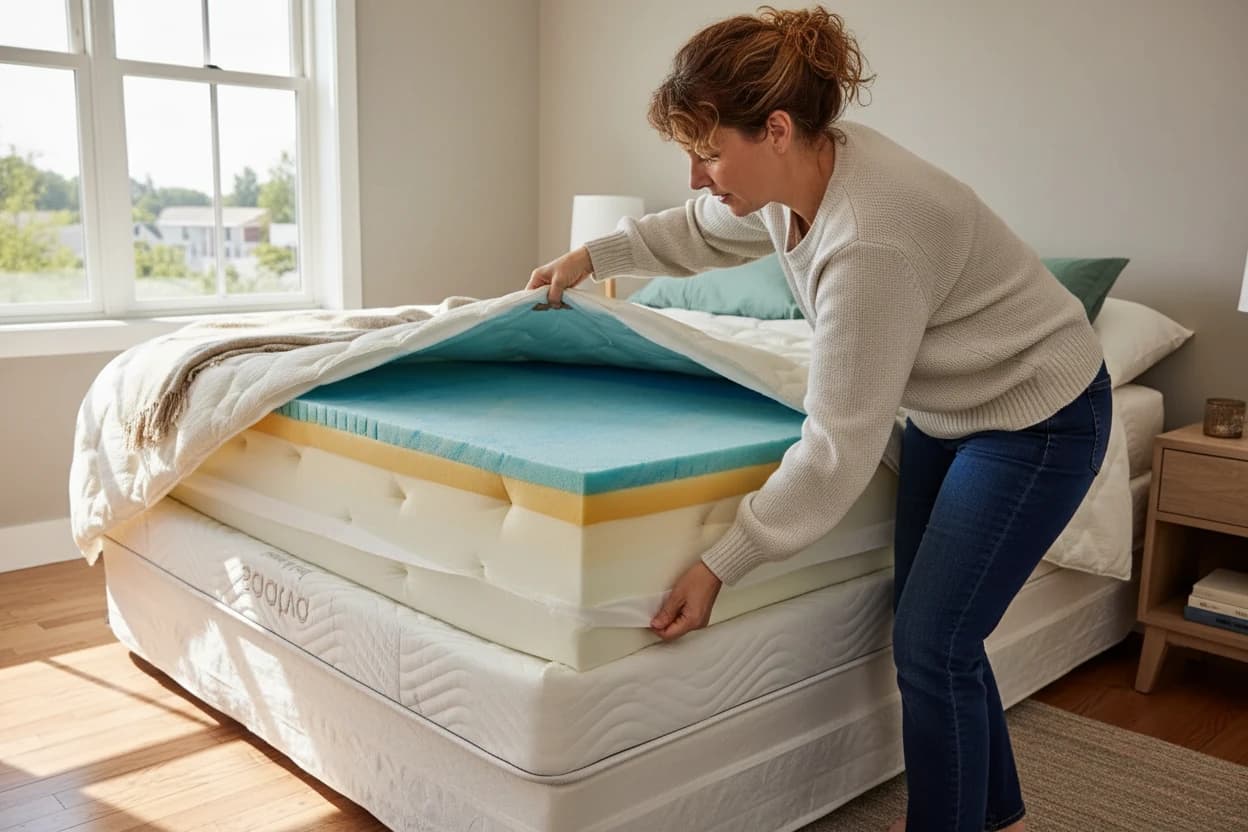
Getting enough sleep is crucial for overall health, impacting mental well-being, weight management, and blood pressure regulation1 . Mattresses play a vital role in managing body pain, improving sleep conditions, and regulating sleep temperature1 . Selecting the right mattress requires careful evaluation of comfort, support, and long-term effects on musculoskeletal health2 . Health’s mattress testing process combines expert input, consumer feedback, and rigorous testing to guide consumers toward better sleep choices1 .
Our Mattress Selection Criteria
Mattress selection for testing aims to cover a broad spectrum of types to meet diverse sleep needs, including variations in firmness, support, and suitability for different body sizes and sleep positions2 . We prioritize mattresses that balance comfort with spinal support, guided by consumer satisfaction and expert consultation2 . Special attention is given to new mattress models and those designed for specific populations, such as children or larger individuals, to ensure appropriate pressure distribution and comfort3 .
Key factors in mattress selection include:
- Accommodating different sleep positions and body types to reflect diverse sleepers2
- Evaluating product features that influence sleep quality and consumer satisfaction2
- Tailoring assessment criteria for mattresses targeting specific groups like children or larger bodies3
- Consulting sleep and medical experts to develop guidelines that optimize sleep health2
This comprehensive approach ensures that the mattresses tested represent a wide range of consumer needs and preferences1 .
Mattress Testing Procedures
Our mattress testing process integrates both subjective and objective evaluations to provide a complete picture of mattress performance2 . Testing occurs in two main environments: controlled laboratory settings and real-world home use2 . Laboratory tests focus on measurable properties such as pressure distribution, heat retention, and motion isolation4 2. Home testing captures subjective comfort and sleep quality over time, reflecting actual user experiences2 .
Before testing begins, medical experts are interviewed to align mattress expectations with biomechanical principles of spinal support and pain relief1 . Testers provide detailed information about their sleep style, pain history, and sleep environment to contextualize results1 . This dual approach ensures that both immediate sensations and long-term effects are considered in mattress evaluations2 .
In-Home Mattress Testing
Home testing emphasizes subjective factors such as comfort, pain relief, and sleep quality over extended periods2 . Testers report on motion transfer and thermal comfort, which are critical for restful sleep, especially for those sharing a bed2 . The delivery and setup process, including mattress expansion time after unpacking, can temporarily affect mattress firmness and feel2 .
Key considerations during home testing include:
- Medical expert input on spinal alignment and pain reduction to guide evaluation2
- Collecting contextual data on sleep position, pain history, and environment2
- Comparing new mattresses with testers’ previous mattresses to assess improvements or issues2
- Monitoring changes in aches, pains, and sleep quality over weeks to months2
- Using quantitative rating scales to summarize subjective comfort and support feedback2
Testers note whether mattresses conform to pressure points without excessive sinkage, balancing cushioning with firm support1 . They also observe any improvements in joint pain and overall sleep quality, which are important indicators of mattress effectiveness1 .
Staying up-to-date on the science of sleep and sleep-tech trends helps provide data-backed mattress recommendations, recognizing that getting a good night's sleep is hard enough without worrying about technical details like foam density and coil tension5 .
Laboratory Mattress Testing
Laboratory testing provides objective data on mattress characteristics that influence sleep quality and durability4 2. Standard methods include infrared thermography to assess heat retention and breathability, and visual motion transfer tests to evaluate disturbance isolation2 . Edge support is tested by applying weight to mattress edges and measuring deformation, which affects usability and comfort near the mattress perimeter2 .
Laboratory tests focus on:
- Measuring pressure distribution to assess biomechanical support4 2
- Evaluating heat retention and breathability using infrared thermometers2
- Conducting motion transfer tests that simulate disturbances and observe stability of objects on the mattress2
- Assessing edge support by measuring sinkage and deformation under load2 6
- Dissecting mattresses to verify internal construction and confirm manufacturer claims4 2
These objective measures complement home testing by quantifying mattress performance in controlled conditions, helping to identify strengths and weaknesses in design and materials2 7.
If you've ever gone mattress shopping, you know how hard comparing mattresses can be. It isn't an exact science, and there are no industry standards for measuring firmness, pressure point relief, support, comfort, or any other important factors consumers consider when choosing a mattress.
— Dr. Michael Breus, Sleep Foundation5
Our Testing Team
Our mattress testing panels include trained evaluators and laypersons to provide diverse and unbiased feedback on comfort, support, and other subjective factors2 . Training ensures consistency and reliability in evaluations, improving the quality of results2 . Testers come from a range of body types, weights, heights, and sleep preferences to reflect varied consumer experiences8 .
The testing team provides:
- Detailed feedback on mattress feel, firmness, and support2
- Visual documentation to support qualitative assessments2
- Objective and unbiased opinions critical for credible mattress reviews2
- Contextual information about testers’ sleep styles and pain history to inform analysis1
- Long-term observations over weeks to assess durability and sustained comfort2
This comprehensive approach allows us to capture a wide range of user experiences and provide well-rounded mattress evaluations8 .
Key Mattress Evaluation Metrics
Comfort
Comfort is an immediate, subjective sensation experienced when lying on a mattress2 . It involves how the mattress feels in terms of cushioning and conformity to the body’s pressure points without excessive sinkage1 . Comfort influences sleep quality and is a primary outcome in mattress evaluation2 .
Support
Support relates to how well a mattress maintains spinal alignment and promotes long-term musculoskeletal health4 2. It depends on mattress firmness and internal structure, affecting how much a sleeper sinks and how the spine is positioned in preferred sleep postures2 4. Support evaluation is individualized based on sleep position and pain history2 .
Temperature
Mattress breathability and heat retention significantly affect sleep quality, especially for individuals prone to overheating2 . Infrared thermography in lab tests measures how mattresses dissipate heat overnight, while home testers report on thermal comfort2 9. Proper temperature regulation helps reduce tossing and turning and supports restorative sleep1 .
Sleep Quality
Sleep quality improvements are key indicators of mattress effectiveness2 . Testers report changes in pain relief, tossing and turning, and ability to stay asleep1 . Objective sleep measurements, such as sleep stage tracking with wearable devices, complement subjective reports9 . Better sleep quality contributes to overall health and well-being1 .
Price and Value
While not explicitly detailed in the research data, price and value are important considerations for consumers. Comprehensive mattress reviews help consumers make informed purchasing decisions by balancing cost with performance, durability, and suitability for individual needs10 8.
| Metric | Description | Measurement Methods |
|---|---|---|
| Comfort | Immediate sensation of cushioning and feel | Subjective tester ratings2 1 |
| Support | Spinal alignment and musculoskeletal health | Spinal alignment observation2 4 |
| Temperature | Breathability and heat retention | Infrared thermography, user feedback2 9 |
| Sleep Quality | Pain relief, sleep continuity, and restfulness | Subjective reports, sleep trackers1 9 |
| Price/Value | Cost-effectiveness and durability | Consumer feedback, durability tests10 8 |
| Sources: 1245678910 | ||
Mattress Testing Conclusions
Mattress comfort and support are related but distinct concepts; comfort is immediate and subjective, while support affects spinal alignment and long-term health4 2. Mattresses with layered foams and coils balance cushioning with structural support4 . Individual factors such as sleep position and pain history influence mattress suitability and effectiveness4 2.
Long-term mattress performance can influence musculoskeletal health and sleep quality, with some mattresses alleviating or causing back pain over time2 . Personalized mattress selection considering sleep style, pain history, and thermal comfort is recommended2 . Consulting healthcare providers is advisable for individuals with chronic pain or health conditions to ensure appropriate mattress choice1 .
Mattress comfort at initial use may not predict long-term effects on back pain and sleep quality. Personal preference remains critical despite general recommendations, and the ultimate goal is achieving restful and restorative sleep2 .
- Mattress testing must consider diverse body types and sleep positions to meet individual needs2 .
- Combining home and lab testing provides a comprehensive assessment of mattress performance2 .
- Comfort and support are both essential metrics, influencing immediate feel and long-term spinal health4 2.
- Temperature regulation and motion isolation are important for sleep quality, especially for couples and those prone to overheating2 .
- Personalized mattress selection and healthcare consultation improve outcomes for individuals with chronic pain2 1.