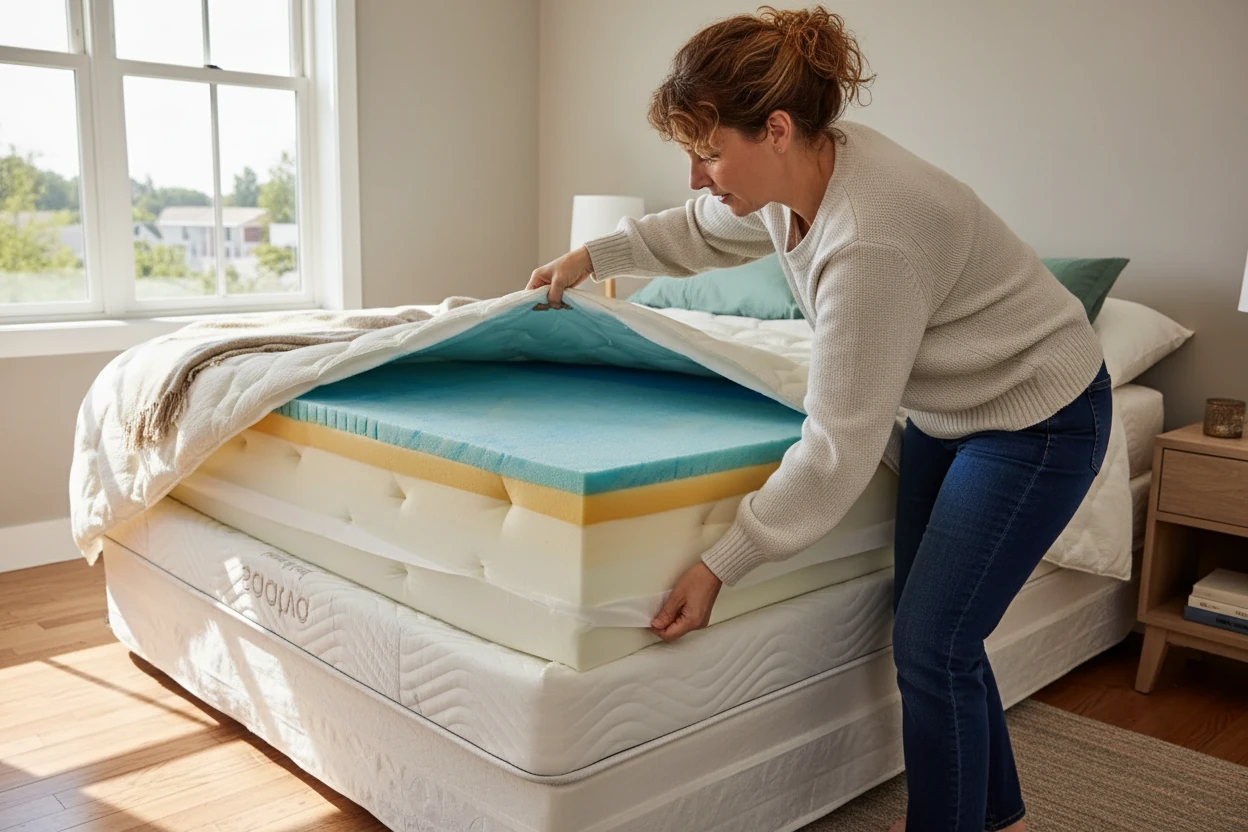
Choosing the right mattress firmness is essential for quality sleep and overall health. Studies show that medium to firm mattresses often provide the best balance of comfort and support, especially for people with back pain1 . Proper spinal alignment during sleep can reduce pain and improve sleep quality, making mattress firmness a key factor in restful nights2 . Understanding how firmness levels affect different sleepers helps guide better mattress choices tailored to individual needs3 .
Why We Use a 5-Point Scale
Mattress firmness is commonly rated on a 10-point scale in the industry, with 1 being the softest and 10 the firmest4 . However, this scale can be confusing for consumers because firmness perception varies widely between brands and mattress materials. To simplify decision-making, many consumer guides and online reviews use a 5-point scale. This scale condenses firmness levels into clear categories, making it easier for shoppers to compare options without testing mattresses in person5 .
The 5-point scale balances simplicity and accuracy by grouping firmness into broad levels that reflect common sleep preferences and needs. This approach helps consumers quickly identify mattresses that offer the right support and comfort for their body type and sleep position5 .
Mattress Firmness Overview
Mattress firmness describes how soft or hard a mattress feels when you lie on it. It is influenced by the materials used and the mattress construction, such as foam density and coil design3 . Softer mattresses allow more sinkage and contouring, while firmer mattresses provide more resistance and support6 .
Firmness is distinct from support: firmness is the initial feel, while support refers to how well the mattress maintains spinal alignment during sleep3 . The ideal firmness varies by individual factors including body weight, size, and preferred sleep position3 . Most sleepers prefer mattresses rated between 5 and 7 on the 10-point scale, which corresponds roughly to medium to medium-firm7 .
Soft Mattress (Level 1)
Soft mattresses offer the lowest level of support and the highest degree of sinkage5 . They are typically recommended for side sleepers who benefit from pressure relief at sensitive areas like the shoulders and hips5 . The deep contouring helps reduce pressure points, which can improve comfort for these sleepers6 .
However, soft mattresses may not provide enough support for stomach sleepers or individuals with back pain. The lack of firmness can cause poor spinal alignment, potentially worsening pain or discomfort over time5 . People who sleep on their stomachs generally need firmer surfaces to keep their spine properly aligned3 .
Soft Plus Mattress (Level 2)
Soft plus mattresses strike a balance between softness and support. They provide a soft surface with some added firmness to help maintain spinal alignment5 . This level is suitable for sleepers who want pressure relief but also require moderate support to avoid excessive sinking5 .
Soft plus mattresses can be especially beneficial for those experiencing pain at pressure points such as the shoulders and hips. The combination of comfort and support helps reduce discomfort while promoting better posture during sleep5 .
Medium Firmness Mattress (Level 3)
Medium firmness mattresses are the most versatile and popular choice. They provide enough sink to relieve pressure but maintain adequate support to keep the spine aligned5 . This level works well for a wide range of sleepers, including side sleepers and most back sleepers5 .
Medium firmness mattresses are often recommended for couples with differing preferences because they balance comfort and support effectively5 . Research shows that medium-firm mattresses improve sleep quality and reduce pain and functional disability in adults with chronic low back pain2 . This firmness level promotes spinal alignment and pressure relief, making it a healthy choice for many8 .
Firm Mattress (Level 4)
Firm mattresses provide sturdy support with minimal sinkage5 . They are particularly recommended for stomach sleepers and individuals with back pain who need extra spinal alignment5 . The firmness helps maintain a neutral spine position, which can alleviate pain and prevent strain3 .
Larger individuals often find firm mattresses more comfortable because the increased support prevents excessive sinking, which can misalign the spine5 . Firm mattresses can also benefit back sleepers who require a surface that resists sagging in the midsection3 .
Extra Firm Mattress (Level 5)
Extra firm mattresses offer the highest level of support with little to no conforming to the body5 . They are ideal for people who need maximum support, such as those with back or neck pain and heavier individuals5 . The firmness helps maintain proper spinal alignment, which is critical for reducing pain and improving sleep quality5 .
Stomach sleepers often prefer extra firm mattresses to prevent sinking in the midsection and to keep the spine aligned3 . This level of firmness may also be suitable for anyone who enjoys a very firm sleeping surface or requires additional support due to body size5 .
How Mattress Firmness Is Measured
Mattress firmness is determined by the materials used and how the mattress is constructed. Firmer mattresses typically contain high-density foam and sturdy coils, while softer mattresses use wider coils and softer foams5 . The number, thickness, and pattern of coils also influence the overall feel and firmness5 .
The mattress industry rates firmness on a scale from 1 to 10, based on the initial feel when lying down4 . Softer mattresses feel deep and contouring, while firmer mattresses offer more resistance and less sinkage6 . Because firmness is subjective, ratings can vary between brands and models, making standardized measurement challenging5 .
Choosing the Right Firmness Level
Selecting the ideal mattress firmness depends on several personal factors:
Body Size
- Larger individuals generally require firmer mattresses to provide adequate support and prevent excessive sinking3 .
- Heavier sleepers often benefit from thicker mattresses with sturdy coil systems for deep compression support6 .
- Smaller or lighter individuals may find softer mattresses more comfortable as they allow gentle contouring without compromising support3 .
Position
- Stomach sleepers typically need firmer mattresses (levels 4 or 5) to maintain spinal alignment and avoid midsection sinking5 .
- Side sleepers benefit most from medium firmness (level 3) to cushion pressure points while supporting spinal posture5 .
- Back sleepers are versatile but should avoid mattresses that are too soft to prevent sagging and misalignment3 .
Sleep Concerns
- People with back or neck pain often find relief on medium to firm mattresses that promote proper spinal alignment1 .
- Pressure relief is important for those with pain at sensitive areas, favoring softer or zoned support mattresses5 .
- Combination sleepers who change positions may prefer medium-firm mattresses that balance comfort and support9 .
Mattress firmness significantly influences sleep quality. Medium-firm mattresses often provide the best balance of comfort and support, improving pain and sleep outcomes for many sleepers2 9.
Delivery Method
- Adjustable air mattresses allow customization of firmness each night, which can benefit those with changing support needs or pain9 .
- Hybrid mattresses combine coils and foam to offer a blend of firm support and comfort, suitable for many body types9 .
💡 Did You Know?
Health ranks mattress firmness on a scale of 1 to 5. Soft mattresses offer the lowest level of support and highest level of sinking in5 .
Understanding Pressure Relief
Pressure relief refers to a mattress’s ability to distribute body weight evenly and reduce pressure on sensitive areas such as hips, shoulders, and lower back5 . This is especially important for people who experience pain or discomfort at pressure points.
Mattresses with good pressure relief help prevent the development of pressure sores and improve overall comfort during sleep5 . Softer mattresses typically offer better pressure relief but may lack sufficient support for spinal alignment in some sleepers6 .
The right firmness level can promote proper spinal alignment while cushioning sensitive areas of the body3 .
Benefits of Zoned Support Systems
Zoned support mattresses provide targeted firmness levels to different areas of the body, such as softer zones for shoulders and firmer zones for the lower back and legs5 . This design helps maintain proper spinal alignment and reduces pressure on sensitive regions.
By tailoring support to body contours, zoned mattresses can improve sleep quality and comfort, especially for people with specific pain or alignment concerns5 .