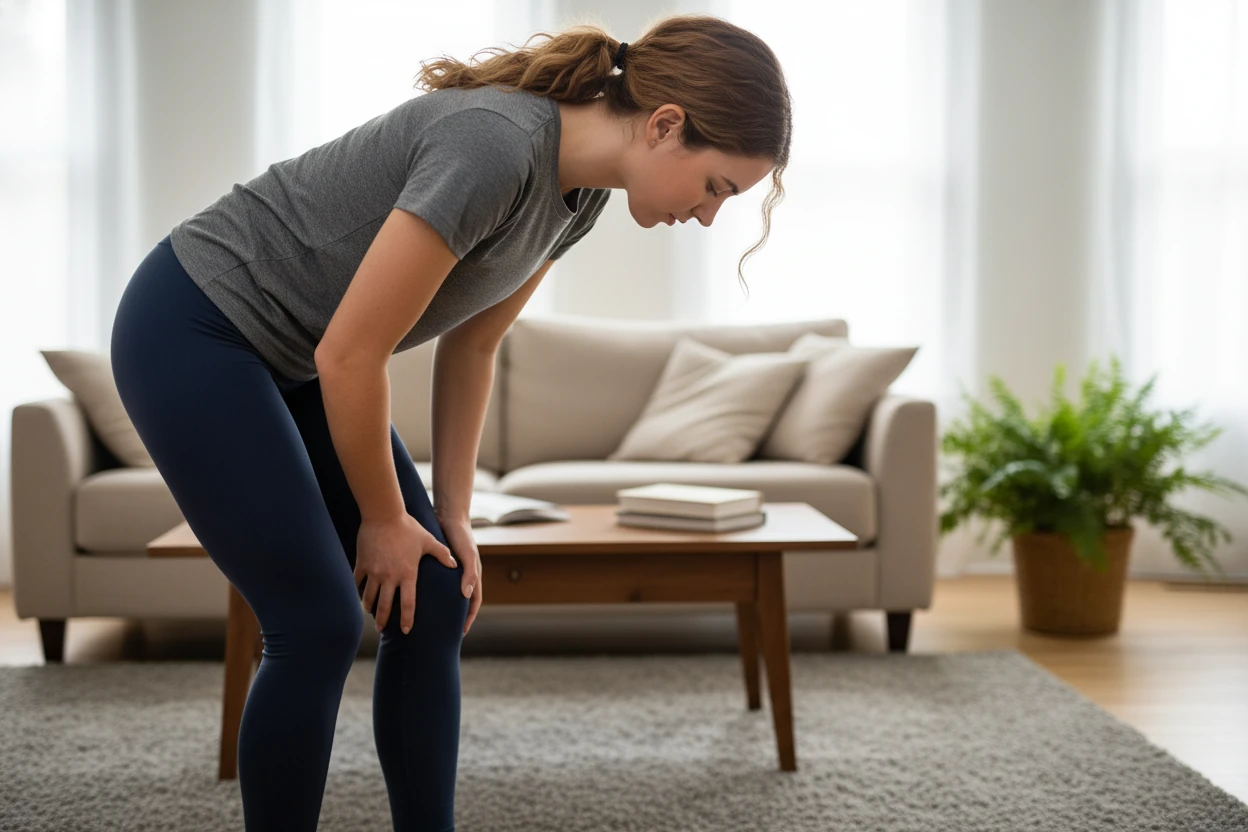
Knee pain is a frequent complaint among runners, affecting many at some point in their training or competition. Running places repeated high loads on the knee joint, making it vulnerable to various injuries and conditions1 . Understanding the common causes of knee pain can help runners manage symptoms and prevent further injury2 .
Runner's Knee (Patellofemoral Pain Syndrome)
Patellofemoral pain syndrome (PFPS), often called runner's knee, is one of the most common causes of knee pain in runners3 . It involves pain under or around the kneecap (patella), typically worsened by activities that load the knee in flexion, such as running, squatting, or descending stairs4 .
Symptoms
PFPS usually presents as a dull ache at the front or sides of the knee near the patella3 . Pain often increases with running, jumping, or prolonged sitting with bent knees5 . Additional symptoms may include cracking or popping sounds during knee movement and tenderness around the kneecap6 . The condition can affect one or both knees and tends to develop gradually over time3 .
Biomechanical factors such as increased hip adduction and altered lower limb movement patterns contribute to PFPS in runners7 . Women and younger adults, especially those between 16 and 25 years old, are more commonly affected4 . Poor kneecap alignment, muscle imbalances, and overuse are also key contributors8 .
Treatment
Conservative treatment is effective for most cases of PFPS9 . The main goals are to reduce pain, improve knee function, and address biomechanical issues. Treatment options include:
- Rest and activity modification to reduce knee stress6
- Therapeutic exercises focusing on strengthening the quadriceps and hip muscles3
- Stretching tight muscles such as hamstrings and calves6
- Manual therapy and neuromuscular re-education to improve movement patterns9
- Use of knee braces or orthotics to support proper alignment6
- Over-the-counter pain relievers like NSAIDs or acetaminophen for symptom relief3
Most people recover within one to two months with appropriate care3 .
Prevention
Preventing PFPS involves addressing modifiable risk factors and maintaining good running habits:
- Gradually increasing activity intensity and volume to avoid overuse6
- Strengthening hip and thigh muscles to support proper knee alignment5
- Warming up and stretching before exercise5
- Wearing appropriate footwear that supports foot mechanics6
- Avoiding running on hard or uneven surfaces when possible5
💡 Did You Know?
PFPS is estimated to affect about one-third of people who seek medical care for knee pain3 .
Iliotibial (IT) Band Syndrome
Iliotibial band syndrome (ITBFS) is a common cause of lateral (outer) knee pain in runners, especially long-distance runners and cyclists10 . It results from repetitive friction between the iliotibial band—a thick fascia running from the hip to the lateral tibia—and the lateral femoral epicondyle during knee movement10 .
ITBFS causes sharp or burning pain on the outside of the knee, which worsens with running, especially downhill, or prolonged sitting with bent knees11 . The pain may extend along the IT band from the hip to below the knee11 . Swelling or tenderness over the lateral knee may also be present10 .
Overuse and sudden increases in training volume are common causes10 . Risk factors include poor running mechanics and muscle imbalances around the hip and thigh11 .
MRI is the preferred imaging technique to confirm ITBFS, showing abnormal signal intensity beneath the iliotibial band and fluid collection10 . Treatment focuses on conservative measures:
- Activity modification to reduce aggravating movements9
- Stretching the IT band and surrounding muscles11
- Strengthening hip abductors and thigh muscles to improve stability9
- Manual therapy and foam rolling to reduce tightness11
- Use of NSAIDs to manage inflammation and pain11
Most runners respond well to these non-surgical treatments9 .
Preventing ITBFS involves maintaining proper biomechanics and avoiding overuse:
- Gradually increasing training intensity and volume11
- Warming up for 5-10 minutes before running11
- Running on level surfaces and avoiding excessive downhill running11
- Wearing supportive shoes that fit well11
- Incorporating hip and thigh strengthening exercises into training11
“A good routine of stretching tight muscles and strengthening hip muscles will do wonders for keeping ITBS from affecting your workout routine.”
— Thanu Jey, DC, CSCS, Yorkville Sports Medicine Clinic2
Jumper's Knee (Patellar Tendinitis)
Patellar tendinitis, commonly known as jumper's knee, is an overuse injury affecting the tendon connecting the kneecap to the shinbone9 . It is one of the top three knee injuries in runners, alongside PFPS and ITBFS9 .
Jumper's knee causes pain just below the kneecap, where the patellar tendon attaches to the tibia2 . The pain typically worsens with running, jumping, or rapid changes in training volume12 . Tenderness and swelling over the tendon may be present9 .
Conservative management is the first-line approach for patellar tendinitis9 . Treatment includes:
- Load management and activity modification to avoid aggravating the tendon9
- Eccentric strengthening exercises targeting the quadriceps9
- Stretching tight muscles around the knee9
- Use of ice and NSAIDs to reduce pain and inflammation9
Most runners improve with these measures without needing surgery9 .
Preventing jumper's knee involves avoiding sudden increases in training and maintaining muscle balance:
- Gradually increasing running volume and intensity12
- Incorporating strength training for the quadriceps and surrounding muscles2
- Proper warm-up and stretching before activity2
- Avoiding repetitive jumping or high-impact activities without adequate conditioning2
Arthritis in the Knee
Knee arthritis, particularly osteoarthritis (OA), is a degenerative joint disease characterized by gradual cartilage breakdown leading to pain and stiffness13 . It is a common cause of knee pain in older adults and can be influenced by running habits14 .
Knee OA causes chronic pain, stiffness, and reduced joint function14 . Pain often worsens with activity and improves with rest13 . Patients may experience swelling, decreased range of motion, and difficulty walking15 .
OA-related knee pain can severely affect quality of life and emotional well-being, sometimes leading to depression13 .
Conservative treatment is the mainstay for knee arthritis9 . Options include:
- Load management and activity modification to reduce joint stress9
- Physical therapy focusing on strengthening and improving joint mobility14
- Intra-articular therapies such as corticosteroids or hyaluronic acid injections, though benefits are often limited or temporary14
- Emerging biological treatments like platelet-rich plasma (PRP) show potential but require more evidence14
- Pain management with NSAIDs and lifestyle changes13
Surgical options are reserved for advanced cases16 .
Preventing knee arthritis involves maintaining joint health and minimizing risk factors:
- Maintaining a healthy body weight to reduce joint load17
- Regular exercise to strengthen muscles around the knee14
- Avoiding repetitive joint stress and injury17
- Using proper running technique and footwear18
Running Form Problems
Poor running form can increase the risk of knee pain and injury by altering the forces on the knee joint18 . Biomechanical factors such as increased hip adduction and altered lower limb kinetics are linked to patellofemoral pain in runners7 .
Running form issues often cause diffuse knee pain aggravated by running and other weight-bearing activities4 . Pain may be accompanied by fatigue or discomfort in surrounding muscles18 .
Correcting running form involves:
- Biomechanical assessment to identify faulty movement patterns19
- Therapeutic exercises to strengthen weak muscles and improve control9
- Manual therapy and neuromuscular re-education to retrain movement9
- Gradual progression of training volume and intensity12
Preventing form-related knee pain includes:
- Gradually increasing running volume and intensity to avoid overload12
- Strengthening hip and core muscles to support proper alignment18
- Using video gait analysis or professional coaching to improve technique19
- Wearing appropriate footwear18
Inappropriate Footwear
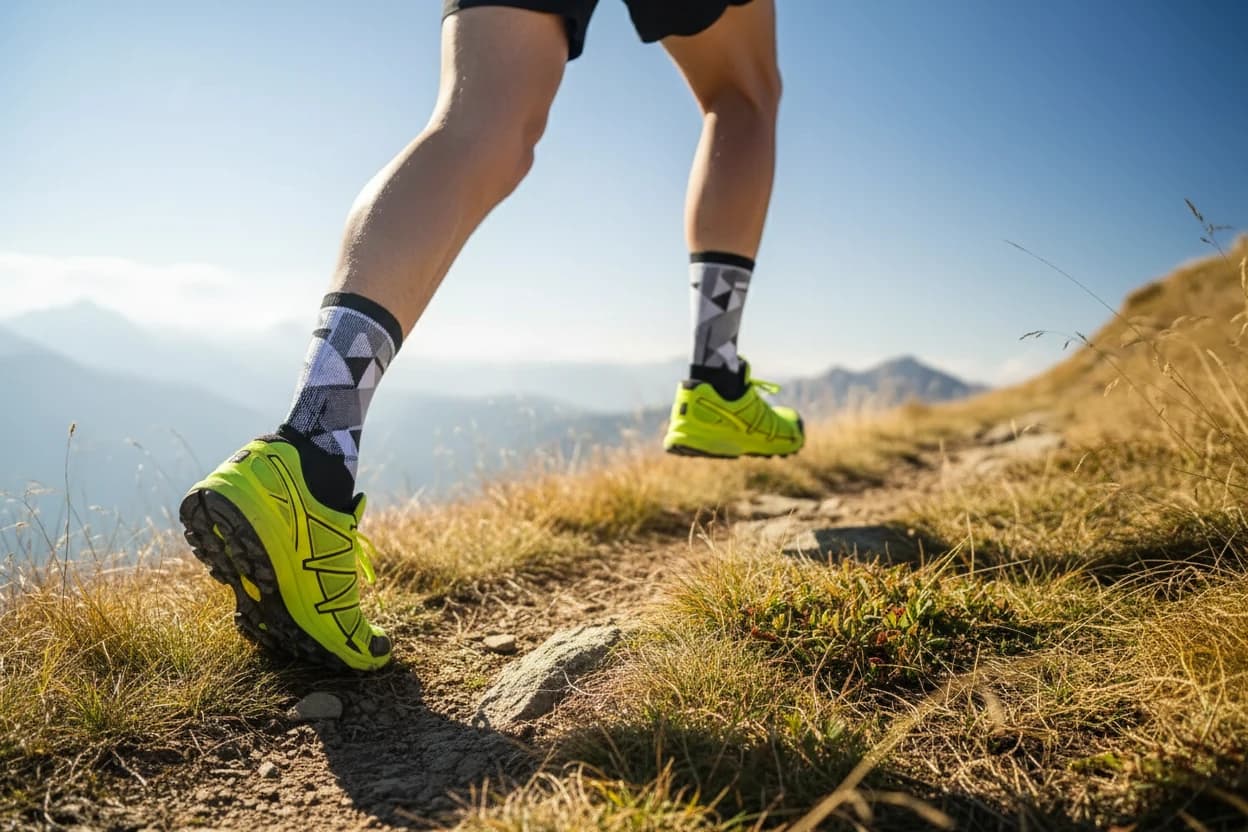
Wearing the wrong shoes can contribute to knee pain by affecting biomechanics and increasing stress on the knee joint18 . Factors such as poor arch support or worn-out shoes can lead to abnormal loading patterns2 .
Knee pain caused by improper footwear often presents as diffuse or localized pain during or after running2 . Symptoms may worsen with increased mileage or intensity18 .
Addressing footwear-related knee pain involves:
- Evaluating and selecting shoes that provide proper support and fit2
- Replacing shoes regularly to maintain cushioning and stability20
- Using orthotics if necessary to correct foot mechanics6
- Combining footwear changes with strengthening and stretching exercises9
Preventing footwear-related knee pain includes:
- Choosing running shoes suited to your foot type and running style2
- Avoiding rapid changes in shoe type or brand20
- Replacing shoes every 300-500 miles or as recommended20
- Incorporating cross-training to reduce repetitive stress2
Preventing Running Knee Injuries
Preventing knee injuries in runners requires a multifaceted approach focusing on training, biomechanics, and equipment. Key strategies include:
- Gradual progression of running volume and intensity to avoid overuse injuries12
- Strengthening hip, thigh, and core muscles to support proper knee alignment9
- Warming up and stretching before and after running5
- Wearing appropriate, well-fitting footwear2
- Paying attention to running surface and form18
When to See a Doctor
Seek medical evaluation if knee pain:
- Persists or worsens despite rest and conservative care9
- Causes significant swelling, deformity, or limited movement1
- Is accompanied by a popping sound or instability1
- Interferes with daily activities or running performance9
Early assessment helps prevent complications and guides effective treatment9 .
Key Takeaways
- Patellofemoral pain syndrome (runner's knee) is the most common cause of knee pain in runners, often due to biomechanical factors and overuse4 7.
- Iliotibial band syndrome causes lateral knee pain from repetitive friction and is common in long-distance runners10 .
- Jumper's knee involves inflammation of the patellar tendon, usually from rapid training increases9 12.
- Knee arthritis leads to chronic pain and stiffness, with treatment focusing on symptom management and joint preservation14 13.
- Poor running form and inappropriate footwear contribute significantly to knee pain and can be addressed with biomechanical correction and proper shoe selection18 2.